[00:00:00] Speaker A: Foreign.
Welcome to Uptown Chats, a podcast where we share stories about environmental justice by and for everyday people. I'm your co host, Lonnie.
[00:00:23] Speaker B: And I'm your other co host, Jaron.
[00:00:25] Speaker A: And today we have another exciting energy related topic for you today that you may be less familiar with. I know I especially was and that's virtual power plants.
[00:00:35] Speaker B: Yeah. Speaking for both Lonnie and myself, we're definitely not experts on this topic, which is why I will be joined by Zoe Vosli from South Bronx Unite to help us unpack what virtual power plants are and how they fit into the conversation about environmental justice.
[00:00:50] Speaker A: But before we get our conversation with Zoe, can you share We ACT Missing
[00:00:53] Speaker B: Jaren I sure can. We act's mission is to build healthy communities by ensuring that people of color and or low income residents participate meaningfully in the creation of sound and fair environmental health and protection policies and practices.
[00:01:06] Speaker A: Thanks, Jaron. For folks who are not familiar with virtual power plants, do not worry, Zoe will provide a great explanation in just a minute. But first we wanted to ground this conversation in the larger context of what's called energy democracy, which is something that we've covered in the podcast before with the help from Steven Roundtree. We'll include the link to the show notes if you want to go back and listen to that episode.
[00:01:28] Speaker B: Yeah. Which I definitely recommend that you do. It's great episode, but in a nutshell, energy democracy means moving away from massive power plants and fossil fuel grids towards local distributed renewable generation like rooftop solar and community wind projects. This transition represents a shift from the corporate sector centralized fossil fuel economy to one that's governed by communities, is designed on the principle of no harm to the environment, supports local economies and contributes to the health and well being of everyone.
[00:02:02] Speaker A: In the words of Stephen Rowntree, no drills, no bills.
[00:02:04] Speaker B: Yeah.
[00:02:06] Speaker A: So this concept of energy democracy is very much baked into the work we do here at we act to promote environmental justice and to make sure that communities are able to benefit from the transition to a cleaner, greener economy.
As one of our close partners, South Bronx United is working towards the same vision. It has some exciting projects underway to utilize virtual power plants to help reduce peak energy demand and lower energy bills for their community. With that said, let's jump into this conversation with Zoe to learn more. I'm so excited.
[00:02:31] Speaker B: Let's do it.
All right, well, thank you so much for joining us as Zoe, we're super happy to have you on on this episode of the podcast to talk about a probably less less known topic but something that I think is no less relevant to environmental justice than the work that we do, virtual power plants. So I'm very much not an expert in this topic. So we want to turn it over to you as much as possible to get into an overview and everything. But before we get ahead of ourselves, do you mind giving just a brief introduction of yourself and your role?
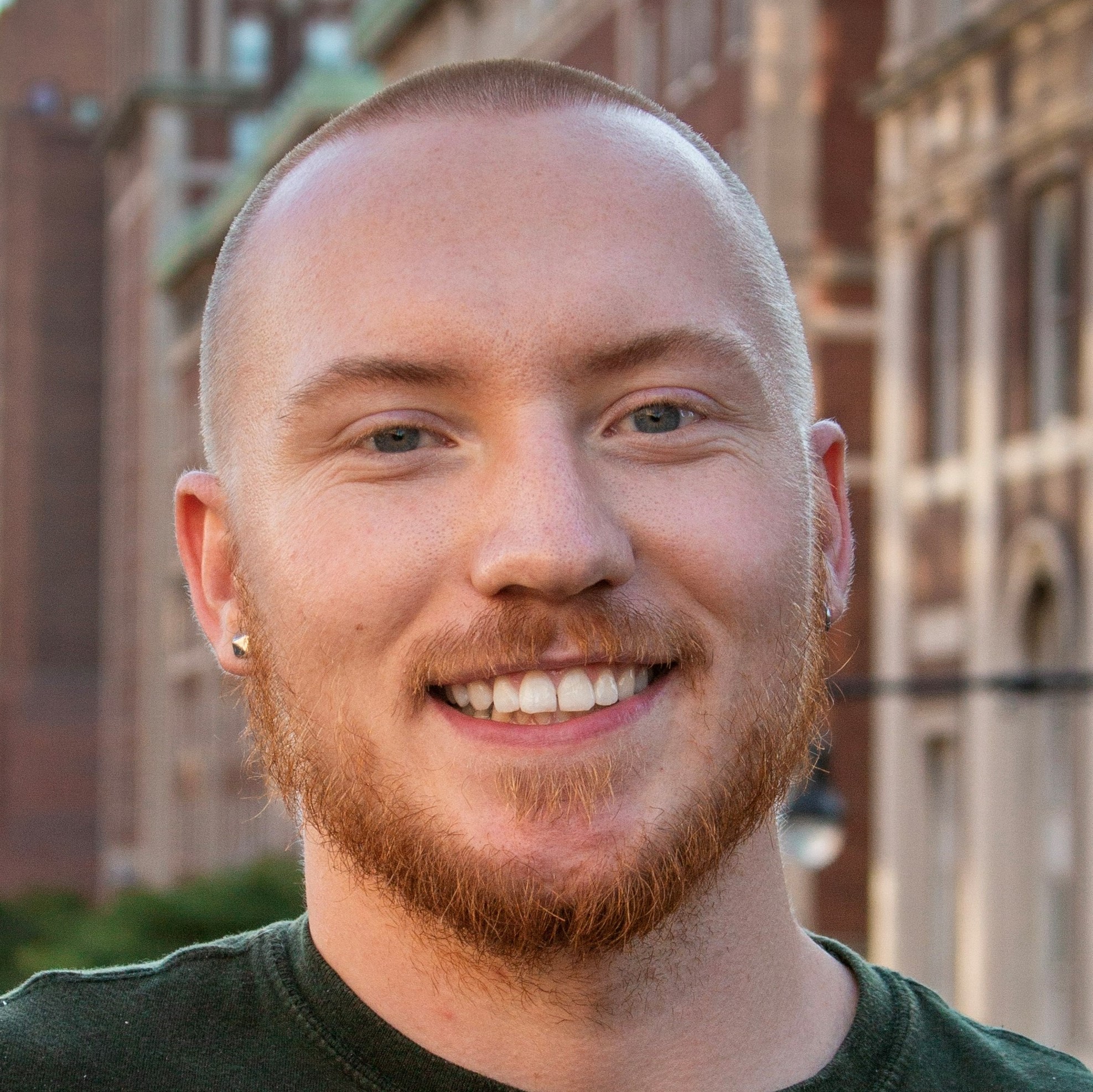
[00:03:08] Speaker C: Of course. Thank you so much, Lonnie and Jaron, for having me today. I've been such a longtime admirer of Weak's work, so I'm really excited to be on the podcast.
I'm Zoe Voss Lee. I'm from New York City. I'm an urban planner, and for the past year I've been working very closely with South Bronx Unite to develop their energy justice campaign in Mott Haven and Port Morris. One of the key components of that is what we're calling a cooperative virtual power plant. And this work emerged as well from a partnership between South Bronx Unite and mit, where I was studying city planning and also was inspired by some work that had been taking place over the past couple years as well in East New York through Brooklyn Communities Collaborative. And so there's a long lineage, I'd say, of there being some thinking around what cooperative virtual power plants or civic virtual power plants can look like. And I feel fortunate to be kind of continuing some of that work with everyone at sbu.
[00:04:08] Speaker A: Awesome. Well, let's dive right in. I think the big question is everyone's talking about energy justice, energy affordability, renewables.
It just keeps coming up. Obviously, it's a core part of a lot of work that we do at We Act. But I think this is a new topic for us. I don't think we've discussed it in the podcast before, and it's something that relates a little bit to some of the battery storage conversations we've been having, community solar conversations, all of that kind of community based energy production and storage. Right. So let's just start with can you give us a high level overview of what a virtual power plant actually is?
[00:04:45] Speaker C: Absolutely, yeah. So a virtual power plant, also called a vpp, is a network of many small distributed energy resources. So things like solar panels, batteries, smart thermostats, could even include EV chargers or EV vehicles themselves. And it coordinates across these resources so that they operate and act like one power plant and are aggregated in a way where they can participate in the wholesale energy market. And there's a couple of different primary types of virtual power plants. The main type that's deployed at kind of the greatest amount is called a demand response vpp.
And so this shifts or cuts energy use at peak times. And here in New York Logical Buildings is one example of a VPP that runs a program called Grid Rewards, which is an app that pays residents to cut power use during Con Edison demand response events.
And so this type of VPP leverages the smart meters that Con Ed has installed across many units in the city. And I believe they had around 9,000 users in one year. And also we're raising a lot of money to kind of install and deploy more smart thermostats across buildings in New York City and New Jersey. There's also another virtual power plant that's run by Google through Nest Thermostats. And so they've been also partnering with different VPP providers to essentially create a VPP that leverages smart Nest thermostats in people's houses. The other main type of virtual power plant is a solar and storage vpp. And so this is a VPP that connects across solar panels as well as batteries, so that you can both generate but also store power and then be able to discharge that in ways that are kind of coordinated. And so something that's, this is the model that we've been most interested in in the Bronx in particular, because of how it could, you know, has the potential to potentially displace what peaker plants do. Since in the South Bronx we know that there's two peaker plants, there's Harlem River Yards and Hellgate, and that there's been reports from the Peak Coalition that speak to the role that virtual power plants, as well as battery deployment could have in displacing these. And so when it comes to thinking about how a virtual power plants could build local wealth, you know, that's also where thinking through how co development of things like solar can be an important component of this.
And one example of a solar and storage VPP would be the Tesla virtual power plant. And so this is a virtual power plant that links across different customers power walls that they have installed to charge their electric vehicles or their homes. And it discharges power to the grid when demand spikes. And so I would say too, though, one thing that's in common across the different VPPs that I've just mentioned is that they're all run by companies, some of them very large companies.
And within these VPPs, I'd say that the payments that residents get are relatively small. And there's concerns of course, when it comes to the role of big tech and big companies in our lives and controlling not only infrastructure but also data as well and being the ones who are essentially profiting the most from this new grid infrastructure.
And that's where I'd say the cooperative or the civic virtual power plant model comes into play in terms of thinking about what does it look like to leverage this technology to think about what coordinating across distributed energy resources looks like through a model that preserves self determination and can build local wealth.
[00:08:16] Speaker B: I love it so much to unpack there. That's such a good opening question and response. Just to really dive into some layers here with this topic. I think I appreciate you talking touching on the connection with beaker plants which we had actually done an episode earlier this year about and we'll make sure to include a link in the show notes for folks. I want to go back and listen to it and like see the connection here, but I think you made it very clear. But I feel like you're already starting to allude to some of our next questions which really kind of unpacking different models of virtual power plants in terms of a more community based model and how to just like any other form of technology, any form of energy infrastructure, there's different ways to implement it that are more community based or more extractive for lack of a better word really. So thinking about how to make it actually work for people and give as much of a benefit to community members. So you've started to tease at that. One quick question I have just as a sidebar before we jump to the next question is just to give people a sense. I'm sure this is something that folks might be thinking is from your understanding, how long have virtual power plants kind of been out there in the world? I feel like again for us we're relatively unfamiliar and I imagine a lot of other people might be too. So they might be wondering is this a brand new technology or has it been around for a while and people just haven't really been paying attention to it? Do you have a sense of that?
[00:09:29] Speaker C: So demand response itself has been around since about the 1980s and virtual power plants emerged. I believe the first one was introduced in 2008 in Germany. But when it comes to the recent growth in VPPs that's really taken place over the past like five or six years. I would say ever since there was a FERC order that was passed in 2020 that kind of opened in many ways pathways for VPPs to operate within wholesale energy markets. And so state ISOs have been or individual ISOs have then been introducing rules that kind of enable VPPs and aggregators to more easily sell energy into the wholesale market.
But when it comes to kind of within the past few years in particular, and the massive amounts of investment that have gone into venture capital backed VPPs, a lot of that has actually been driven too by the rise of data centers and the fact that data centers are drawing immense amounts of energy from the grid. And there's a need to understand and for data center developers to think through how to essentially be able to reduce their own energy usage and interconnect faster.
And so that's considered to be one of the drivers for why there's been so much recent investment and interest in VPPs from I'd say more so maybe the industry side of things.
But also though too, I'd say at a more local level in New York, because there's been so much, because there's been advocacy and research around how demand response could better be used to shut down peaker plants, for instance, I would say that that's also a driver for why there's interest in VPPs more recently.
[00:11:07] Speaker B: And just to quickly, before we move on to the next question, I appreciate you indulging my old tangent there. FERC and ISO, just to unpack those acronyms for people.
[00:11:17] Speaker C: Yes. FERC stands for the Federal Energy Regulatory Commission. And so it's essentially the federal body that then sets rules that ISOs, which are independent system operators, then have to essentially uptake.
[00:11:30] Speaker B: Perfect, thank you. Just for folks that are less familiar with that terminology, all that said, I think you've set us up perfectly to kind of segue to the next question, especially thinking about the more community based models and just the role of virtual power plants and transitioning away from peaker plants, all the things. But to just put it into a question, how do you connect virtual power plants to environmental justice and what's kind of that core connection between how we generate and manage energy and who bears the burden or gets the benefits?
[00:11:59] Speaker C: Absolutely. Yeah. I think that this is a really important question, especially because of what I was just sharing earlier about the fact that while VPPs are growing a lot, many people don't even know what a virtual power plan is. Have never heard of the term vpp, except if you're someone who works in the energy space.
And so when it comes to environmental justice and how that connects to this technology, I think a lot about energy democracy and the principles of energy democracy as in many ways very tied to EJ principles in terms of ensuring that the people who are impacted by environmental and energy injustices are both equipped with the knowledge and also have the ability to shape environmental and energy decisions. And so the way that we've been approaching this at South Bronx Unite has been grounded in the belief that ownership and stewardship is a process.
And so what this means is starting with education.
So over the summer, we hosted a couple of community zoom sessions that were focused on just talking through what is the grid? How does energy get from power plants to your house?
What are renewable energy resources? And what does this mean not only for how electricity gets delivered to your home, but for our broader climate goals, as well as at a political and economic level. What are the opportunities here for what this means for building community power in many ways? And so I would say that that's a really important part of this, is education and grounding These topics that have typically been discussed and have been made very technocratic in a way that makes it very for people to engage in talking about the energy system, let alone influencing it or making decisions around it, and making those conversations grounded in the lived experience of people who understand intimately how energy and the unaffordability of energy, as well as the lack of availability of it, affects their lives.
That's been a really big part of how we've been thinking about this, the cooperative virtual power plant in the South Bronx. And I would say, too, that, you know, I mean, of course, there's. There's many other ways as well in which this is tied to environmental justice principles. Yet we've already touched on the peaker plants and the fact that peaker plants are a massive contributor to air pollutants in the South Bronx, as well as in many other environmental justice communities in New York City. And so that's also a big part of both how we talk about how cooperative virtual power plants could support things like retiring the peaker plants, as well as on the policy side, too, thinking through as well, how VPPs are something that need to be taken seriously, but not just deployed en masse, but also deployed in a way that is not simply repeating past patterns where outside companies come into communities, but in many ways, how there's an opportunity to create a new model where communities can have power and where energy infrastructure can build local wealth and opportunities.
[00:15:08] Speaker A: Literally, the whole point of the podcast is talking about this idea of private entities or government being extractive with the communities or not really being a part of these benefits of this transition. And so I do always appreciate organizations like South Marx Unite as well, who go through, like, we act and we try to educate the community, because you can't be a part of something that you don't really know about.
And you also get kind of fearful. Like you said, technocratic is a good word. A lot of this can be seen super heavy. And all people are trying to do is have lower bills and cleaner air. Right? Like, that's the simple. At the end of the day, that's what people want. But there's all of these layers, barriers to entry to be a part of this work.
In your mind, what does it look like when a virtual power plant program in a cooperative way really worked for the community? Can you kind of paint a picture of the best case outcome for like, for someone, for someone's household or neighborhood?
[00:16:03] Speaker C: Yeah, absolutely. I mean, yeah, I would say, in short, you know, to many of the things that you just said, it means lowering energy bills as well as, you know, ensuring that or supporting efforts to close the peaker plants and ensure that, you know, the way that we're creating energy in one part of the city, you know, isn't causing harm to people in another part of the city.
And so, you know, the way that we've been building this out in the South Bronx, and of course, you know, we're in the planning stages and recognize that this is an effort that will take many, many years to realize. But we've been focused on the solar and storage deployment part of things. And part of that's because, I'd say, for a couple of reasons. One of them is because in the South Bronx, of course, there's a very large concentration of NYCHA developments. And so when it comes to how people can participate in BPPs, many people who live in NYCHA buildings don't receive an energy bill. And so when it comes to, I'd say the more traditional demand response model where residents, you know, or maybe it's tied to a smart thermostat or some other appliance in their house, you know, we know that for NYCHA tenants that those people would not be receiving the direct benefits from that model of a virtual power plant.
We also had been thinking too about, oh, I'd say too, you know, also kind of on that similar thread, you know, when it comes to demand response, there's also concerns too about how equitable it is.
I believe the Peak Coalition also put out a report that was focused on demand response and equity. And what it showed was that the parts of the city that most typically are affected by demand response in terms of having their voltage reductions when power demand is high are communities of color. I believe it was parts of central Brooklyn that were most affected by voltage reductions. I Know that over the summer too many people in the South Bronx also experienced voltage reductions during some of the summer heat waves.
And so there's also a concern too that especially in lower income communities of color, that these are places where people are already doing everything they can to reduce their energy usage, to cut down on their energy bills, oftentimes in ways that compromise things like health, for instance, not running an air conditioner on a hot day. And so one of the reasons, that's another reason why we've been focused on thinking through how can we co develop renewable energy resources in ways that can directly deliver bill discounts to residents while also being able to generate revenue that can then be reinvested into the community. Whether that's into things like building retrofits or into climate resilience or into expanding the amount of community owned solar that there could be.
We've been working with Working Power, who's a solar developer, they're the solar developer that co developed the Sunset park solar array with Uprose. And so they know, specialize in setting up these co development and co ownership agreements for solar. And we've been working with them to essentially assess, you know, where in the South Bronx could we co develop solar in a way that. And how, and what would the benefit be to residents in terms of how many people would be able to get cheaper energy through that and how much money would be generated over the lifetime of the project that could be reinvested.
[00:19:21] Speaker B: I appreciate you kind of unpacking some of these layers and also touching on the reality that you know, when we think about conserving energy usage and some of the coping mechanisms that people have to implement to try to, you know, keep the energy bill manageable. We had again you're connecting a lot of previous episodes that we've done together. I really appreciate this. We had a conversation, I think it was Last year with Dr. Diana Hernandez about her book Powerless and some of those, you know, coping strategies that people use to manage their energy bill. So I appreciate the through line here and connecting it back to that and thinking through like what some of the potential benefits of this community based model are. And like, like you said, these things take time, you know, so excited to see that come to fruition. But you've also kind of been alluding to some of the policy layers, you know, kind of around this work with the, with FERC and with other things. And so I wanted to kind of like start to bring that aspect into the conversation as well and just thinking about what the policy landscape is here. If Policymakers and utilities could do one thing to make sure that virtual power plants advance environmental justice. What would it be?
What are things that are either already starting to be implemented or things that we haven't seen that would be good to see to really bolster this technology in a way that's actually beneficial to communities?
[00:20:41] Speaker C: Absolutely.
One specific piece of policy that we've been looking at is called the Great Act. It stands for the New York State Grid Reliability and Energy Affordability Transition Act. And it was introduced by Anna Kells and it passed the Senate on June 1, 2026, and it's now in the Assembly Ways and Means Committee. And so we're hoping that the assembly will act on it soon, but if not, it will need to be introduced next session. But what this act would do is it would require every major utility across the state to launch a VPP program within 90 days. And it has separate tracks for batteries as well as for demand response devices like thermostats and water heaters. And so what this would mean is that utilities would have to meet peak reduction targets, and these targets rise every year for at least a decade. And there would be financial rewards and possible penalties that are tied to hitting them. And so this is a type of policy that directs regulators to design programs. And so I'll add to that utilities can't act as aggregators specifically. And so what this means is that it potentially opens the door for other organizations to run VPPs. Of course, the standard model is that this opens the door for, for companies, for some of the venture capital backed companies, for some of the big companies I mentioned, like Google, to step into this space. But we also see that there could be a potential opportunity for it to open up a pathway for other entities as well to kind of step in and serve as the aggregators for some of this within this program.
And I'd say too though that there's a number of ways that the great act could be made more equitable.
One is that since the current language doesn't necessarily have pathways for renters or people in big buildings, which is many, many people in New York City and especially in the South Bronx to participate. And so one way that it could be more equitable is it needs a way for building level as well as shared batteries to participate so that tenants can benefit from this program without necessarily owning their own equipment.
Another way too is that currently, so the amended bill text, it dropped upfront incentives that would help people be able to get equipment that could participate in the program.
And so essentially without that part of the bill, the people who already own batteries or who already own smart devices are the ones who are essentially able to participate first. And so there need to be ways as well to ensure that people who don't currently have, whether it's a smart thermostat or whether it's a battery, which obviously in New York City there's also many challenges when it comes to residential battery deployments and many concerns.
But there need to be ways as well, essentially for people to participate if they don't already own this equipment.
I would also say too, that there's an opportunity to target communities that are affected by peaker plants within this. So there could be a way to prioritize virtual power plant capacity in neighborhoods like Mott Haven, Port Morris, Upper Manhattan, and be able to in some ways tie this as well to, you know, the state's goals and commitments around retiring the peaker plants that we know there might be challenges when it comes to actually meeting some of those commitments.
[00:23:56] Speaker A: Well, thanks for that. We act is definitely supportive of the great act, and I think being a policy wonk in on the policy team as well, it's always thinking about how can we make these bills or these legislation that we support better and work for environmental justice community. So I definitely appreciate your expertise in deep diving in and looking forward to doing some of that work and that advocacy as the session starts beginning of next year. We learned so much so far, but I wanted to make sure I gave you a chance to be able to express. Is there anything else that you'd like to mention or uplift that you didn't get a chance to talk about?
[00:24:33] Speaker C: I would just add that trust is really crucial to all of this working, both when it comes to deploying virtual power plan, but also even solar and even batteries. You know, we know that there's histories in many of these communities for companies to come in and, you know, whether it's extracting data, whether it's extracting resources or land, or just making decisions without the community's consent or without the community even being informed that, you know, it's critical for there to be, you know, trusted partners who are the ones who are able to organize residents and create infrastructure or create models for deploying infrastructure in ways that are rooted in the community's needs and also visions for the future, that's a large part of what's informed a lot of this work and what we also think is just crucial for deploying distributed energy resources in neighborhoods like the South Bronx. And I would just add to that another area within the cooperative or community virtual power plant space that I think is exciting is also an initiative or a model called EnergyNet.
I believe it began in Sweden, but essentially it's an open model that connects across different energy resources.
And so while many of the VPPs that have been deployed are run by large companies or by venture capital backed companies, there is, I'd say some exciting innovation taking place within the open source VPP space that I think is especially suitable to thinking through what a community led or what a cooperative VPP could look like in the South Bronx and in other New York City neighborhoods.
[00:26:14] Speaker B: I appreciate you adding those extra pieces about examples in other parts of the world where this technology is kind of leaning into where people are implementing this technology in a way that's more community based because I think it's rare that the United States is on the forefront of these technologies. So it's always nice to see how other countries, other places are implementing it so we can learn from that and try to take the best approaches and learn from those and implement them in a way that makes sense here in the States. And I just appreciate this conversation in general being so rooted in a community based approach to this technology because I think that's often what gets missed when we talk about any of these energy infrastructure innovations.
It's often just about dollars and cents or about innovation for the sake of innovation and not about like, well, let's do this to better benefit communities and have them be at the forefront of how that gets implemented to really benefit them first and foremost. So naturally not surprising to hear from South Bronx United. That's the angle that y' all are thinking about. This obviously why we wanted to have you here with us to talk about it on the podcast. So thanks again. Thanks so much. I feel like I learned a lot again coming into this with virtually no knowledge about virtual power plants.
Sorry, I had to sneak it in there somewhere. Somewhere someone laughed and that's why I do what I do.
But thank you so much for sharing all this information and definitely have to have you back on the show again at some point to unpack lots of the other work that I know that y' all are doing over at South Bronx unite. But thanks for joining us today.
[00:27:47] Speaker C: Thank you so much. Really appreciate the opportunity and yeah, many other directions that we can go down in a future episode.
[00:27:54] Speaker B: Awesome.
[00:28:00] Speaker A: Thanks for listening. If you liked this episode, make sure to rate and review the show on whatever platform you listen on. If you have thoughts about the show or suggestions for topics you want to discuss, we encourage you to reach out to
[email protected] I also want to remind
[00:28:13] Speaker B: folks about our Uptown Chats hotline, where listeners can call in with questions they have about climate and environmental justice.
Got a question?
Call 877-Uptown 6. That's 877-878-6966.
[00:28:28] Speaker A: Check out We act on Facebook at WeAct4EJ. That's W E A C T F O R E j on Instagram, bluesky and YouTube @weact4ej. That's weact number 4ej. And check out our website weact.org for more information about environmental justice.
[00:28:44] Speaker B: Until next time.
[00:28:45] Speaker A: Oh J. Thanks.