[00:00:00] Speaker A: Foreign.
[00:00:17] Speaker B: Welcome to Uptown Chats, a podcast where we share stories about environmental justice by and for everyday people.
I'm your co host, Lonnie.
[00:00:24] Speaker C: And I'm your other co host, Jaron.
[00:00:26] Speaker B: And today we thought it was fitting to have a little conversation about finances, particularly given that it's tax season and I also have not done my taxes yet.
[00:00:34] Speaker C: Me either.
[00:00:35] Speaker B: So finances are definitely on our minds.
[00:00:37] Speaker C: Yeah. More specifically, we'll be talking about this concept of liberatory finance with special guest Bunny McKenzie Mack, who's the CEO and founder of MMG Earth. This was actually a really fun conversation for us, so hopefully you enjoy it too.
[00:00:51] Speaker B: We learned a lot this episode, but before we get into our interview, Jaron, can you share weac's mission?
[00:00:56] Speaker C: Of course, but before I do, I wanted to make a quick announcement that we are officially launching our Uptown Chats hotline where listeners can call in with questions they have about climate and environmental justice. Got a question? Call 877-Uptown-6. That's 877-Uptown- 6. You might just make an appearance on the show.
Now I'll read the mission. We ACT's mission is to build healthy communities by ensuring that people of color and or low income residents participate meaningfully in the creation of sound and fair environmental, health and protection policies and practices.
[00:01:31] Speaker B: As Jaron mentioned, our episode today is focused on unpacking the term liberatory finance, courtesy of our guest buddy, Mackenzie Mack. Our conversation was a bit more conceptual, so we wanted to ground it in a concrete example.
[00:01:45] Speaker C: Yeah, so in a nutshell, our conversation is all about the idea of balancing individual needs with community needs, including finances, but also other things like health and well being.
One campaign that WE ACT has been working on over the last couple of years that aligns with this concept is our work on the Community Land act, which is a set of bills that give community land trusts or CLTs and other nonprofits trust tools to develop and preserve permanently affordable housing, community and commercial spaces and other critical needs for the benefit of the community.
[00:02:20] Speaker B: We've talked about the Community Land act and Community Land Trust on a previous podcast episode with Annie carforo. That's episode 34 if you want to check that out. But basically, CLTs remove land from the speculative real estate market and place it under community governance. Essentially, community residents collectively steward the land to ensure permanent affordability of housing, expansion of green and open spaces, and anti displacement protection. So what does that mean when the concept of liberatory finance. It means that residents participate in governance decisions and it interrupts cycles of displacement and cultural erasure in neighborhoods, and it restructures ownership. It goes beyond just providing access.
[00:02:58] Speaker C: Yeah. So we definitely encourage you, if that, if you want to unpack that idea a little bit more, to go back and listen to the episode. But hopefully just this little bit of background about what community land trusts are provide some context for how we can think about this concept of liberatory finance here in New York City. But we also encourage you to keep this example in mind while you listen to our conversation with Bunny.
[00:03:21] Speaker B: With that, let's go ahead and jump into our interview.
[00:03:23] Speaker C: Let's go.
All right. Well, thank you so much for joining us, Bonnie. We're excited to have you on the podcast and to get into, I think, a lot of different things that we're going to be talking about today, but kind of centering our conversation around finance and economics and just really what that means for some of the work that we're doing in this environmental justice space and trying to tie it into some specific examples and things that you're working on and have worked on.
But before I get carried away and get to all the good stuff, I just want to give you a chance to briefly introduce yourself and just tell us a little bit about your background.
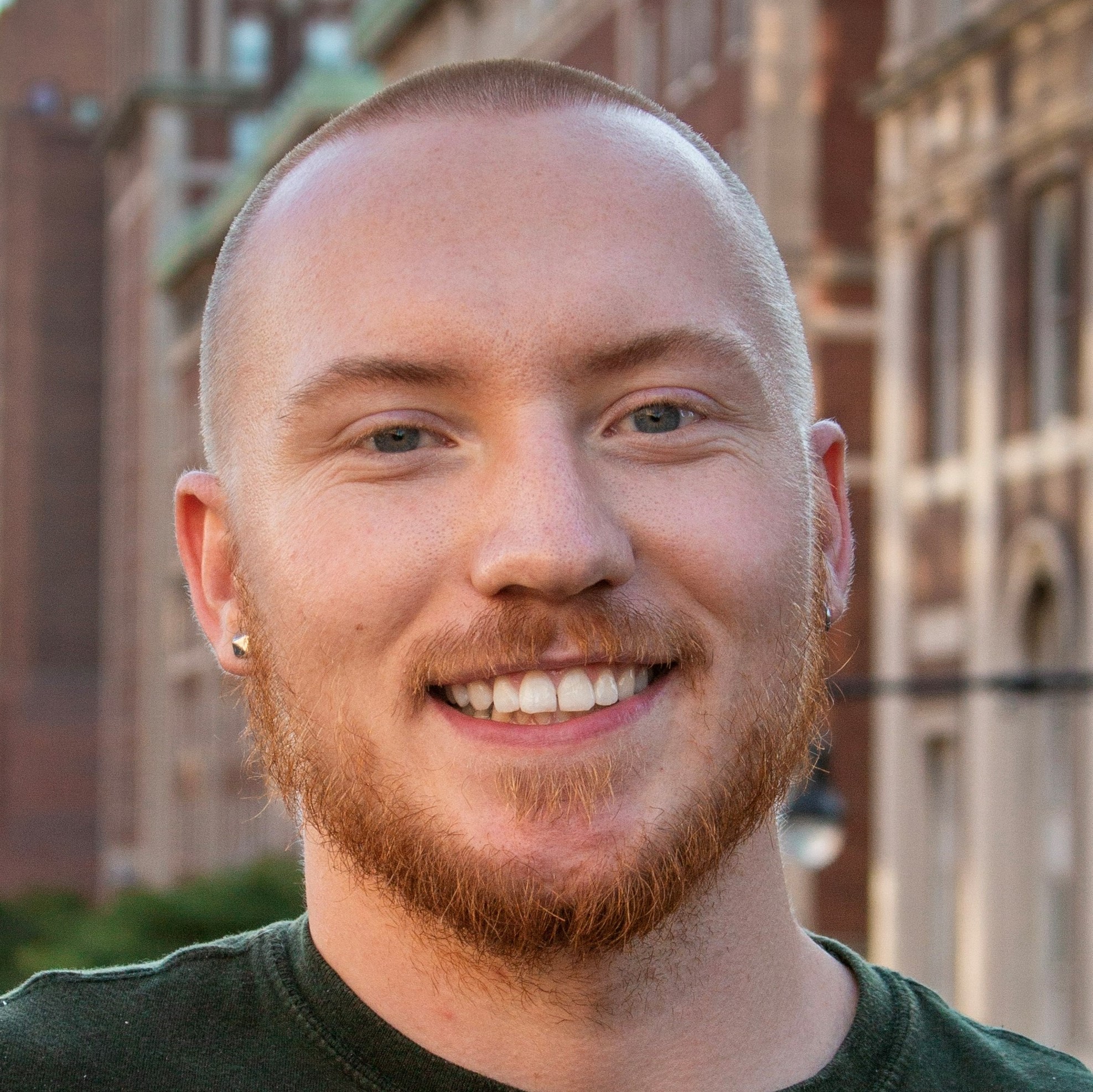
[00:04:05] Speaker A: So my name is Bunny McKenzie Mack. Thank you all both so much for having me. I like to call myself an economist from the future, instead of saying a future economist because it sounds cooler. And then I've been working as a strategist within progressive organizations for about nine years. It'll be 10 years of next year.
I'm also the founder of Econ Club, which is the first finance club for the 99% very proud Chicagoan. But if you've met a Chicagoan ever in your life, then, you know, all of us are.
And I think for me, really excited to be able to dig into a conversation about environmental justice and about liberatory finance with y' all today.
[00:04:42] Speaker B: I am so excited to have you because I am a econ nerd in lots of ways. It was a passion that I didn't get to pursue earlier in life. So I'm happy you're on here to kind of talk through some of this stuff. And you just kind of. I think we can start with, you know, you just talked about one of the kind of principles and basics of the things that you talk about a lot is the liberatory finance. And so to kind of, if you can just kind of help us unpack that term a little bit, I think a lot, it might be new to A lot of folks, it's new to me as well. So I'm, I'm interested in learning from you as well. But can you just unpack the term liberatory finance and can you give us an example of what that actually looks like?
[00:05:17] Speaker A: Absolutely. So I would say that, you know, for most people, their experience with hearing about finance, especially on social media, is here's how you get rich, that's most financial content, financial education. So it's really focused on hyper individualism. Here's how you build, you get rich, or here's how your family builds wealth. But we don't just survive and thrive as individuals because we're inherently interconnected, interdependent as human beings. So liberatory finance is a step above that. It's how do we become rich? And as opposed to it just being about how we become rich financially, it's how do we become rich in resources, time, safety, care, clean air and water, housing stability, community capacity, power. So it cuts through that mythology that everyone is meant to only focus on wealth through a financial lens. And it really does acknowledge interconnectedness like neighborhood to neighborhood, city to rural community centering, collective well being. Instead of it being about a few folks at the top being focused on more so extraction, it's like how do, what does it look like for each individual person to be able to look at systems and not just bank accounts so we can all kind of live in a way that is, well, according to our individual definition.
What's an example that I might use of that?
An example I might use would come specifically from Chicago. For me, when I was in climate change and public health, the certificate program at Yale, they encouraged us to basically choose a campaign. So it would be a campaign that focused on our local community, that was focused on environmental justice and the ways in which we would build out that campaign through really just like person to person communication with people about why a specific issue or concern was important.
So the one that I picked was lead, since Chicago has basically one of the highest number of lead pipes in the entire United States.
And because I know that a lot of those lead pipes are located in predominantly black and brown communities with very, very high levels of unemployment. And so for me, liberatory finance would mean, hey, maybe we could focus on, you know, let's say 5% or 6% or 10% of the population that doesn't have to do with, that doesn't have any issues with like lead pipes or potential exposure to lead.
And we can focus on their wealth and their well being and like Their health, health outcomes being very positive.
But also what would it look like for us to take an approach of looking at the collective and asking ourselves, you know, would it be great if everyone who lived in a particular city or region or country actually didn't have to worry about this issue?
And if everyone in a country didn't have to worry about this issue, if we were to reverse engineer that, what would it take from us in terms of time, in terms of resource, in terms of communications with our elected officials, and also in terms of literally financial capital to ensure that every family, every community could be free from potential exposure which, you know, could have really, really detrimental health outcomes for them and their families and their communities.
So it's how do we look at the collective and how do we raise the bar on our standards of what it means to be wealthy in this society?
[00:08:25] Speaker C: I appreciate you grounding that in an example. And you're right, we're definitely going to unpack that a little bit more. And you got to one of the things that we always try to get to in our interviews, but we did starting with it right from the beginning, but framing this conversation around the, and through an environmental justice lens and really the issue of lead, lead pipes, lead paint, being right at the forefront of that. So you kind of already started to share some of your experience working on this project in your hometown of Chicago. But I want to unpack that a little bit more and think through how this concept of liberatory finance, how do you see it being used to help advance environmental justice? And you can continue to build on this example in Chicago with lead or if there's other kind of pieces you want to touch on. But yeah, what does that look like in terms of fitting that concept of laboratory finance into this idea of advancing environmental justice?
[00:09:18] Speaker A: Absolutely. First I want to say y' all are so such good listeners, which is so dangerous for me because then I'll just be talking, talking, talking. Like I'm like, wait a minute, there's two other people.
Y' all are really good listeners. Like, I'm like, I feel so heard right now. I really appreciate that. So kudos to you, Jaron and lj. But I will start by talking about gentrification. I feel like it's low hanging fruit.
Cities like New York City and Chicago were built and are continue to be powered by working class people, by blue collar workers.
We know that climate change accelerates what's called climate gentrification. So it means when people who predominantly, especially black and brown folks. But also we could be talking about women, we could be talking about queer and trans people, people at a certain class level, especially who are living at or below the poverty line, who are living paycheck to paycheck when they live in highly coveted neighborhoods, because the neighborhoods they live in are becoming more valuable since those are neighborhoods that don't, that are more climate resilient. Right? So when there's flooding, maybe those are neighborhoods that don't flood. Or potentially, if it's a community where that's surrounded by a region that is experiencing an increase in extreme heat days, maybe that's an area that doesn't experience as many extreme heat days.
And so when we think about gentrification and the conversations we've had around that, I think another sort of like element to that that's really critical is that scientists tell us that climate gentrification is going to increase displacement over time.
And typically when we think about who's displaced first, people who don't have access to the resources to stay. Right. Especially when the property values in a particular community are rising really quickly because they live in a neighborhood that is on higher ground or maybe is closer to like water or fresher streams of water, et cetera, et cetera. So for me, whenever I think about environmental justice, I think environmental justice is liberatory finance.
Because even when we think about climate resilience, it requires money, it requires access to political power. It asks who gets access to cooling centers, who gets access to green infrastructure, who gets protected when there's flooding?
And not just protected in terms of living in an area that floods, but I mean protect it from an insurance perspective, where they actually have the funding that they need to be able to recover once a flood has happened, these are all financial questions. And so in thinking about the liberatory finance as a new framework, as a different framework for understanding finance, it helps to take us out of the zero sum game sort of approach, thinking about finance, which is if you have more than I have less, or if you have more and have not had anything, then that means something is being taken from me. And it really does combine the concepts of economics and finance. I could talk about this for hours, but I promise you all, I am not going to be too. I'm not going to get on my soapbox for long when I say this, but it would be probably really shocking for people to know that most wealth managers, like for example, in the United States today, are not required to study economics.
And economics is actually what teach is exactly, is actually what teaches us how the systems work. So when you Think about that and you're like, oh, wow, that's like, you know, really interesting. Maybe I didn't know that.
To take it up a notch. Why that's so important is because when we think about the advice that we get from folks that work within the financial sector about what money to spend and what money not to spend, oftentimes that's coming from an individualist perspective of what's best for the singular organization, the single state, the single city, the family, that one community.
But it really is missing out on the economic speaks, which is what tells us what's happening economically at a macro level, why it's happening, how it's impacting people across a particular region, across a particular city.
And why it's so important for laboratory finance to exist is because we need the combinations of the two. Because if we don't, it's so easy for us to live in glass houses and for us to focus on the environmental context within our region, just as long as we feel safe and just as long as we have access to climate recovery. But it doesn't take into account the fact that because we're interconnected, all of our resources financially are connected too.
So if climate recovery is not funded federally for a particular state, a particular region, of course that's going to create displacement. Displacement means that people are moving to other regions. Moving to other regions means that places where people are moving to need additional resources to be able to sustain those folks.
And if they don't have the resources that they need, then it puts people in a very. In a very precarious place, not just financially, but interpersonally and generationally.
So this is why I love talking about this topic. If you all can't tell, well, I'm so passionate about it because I'm a systems thinker. This is the work that I've been doing in progressive organizations for nine years. So I like to ask myself, how does everything connect together? How does it work together? Before I ask how we disrupt a system that's ineffective, I ask myself, but first, how does the system work so that when we create something new to go in its place, I can know that I'm not creating a duplicate, but I'm actually creating something different that helps to solve the problem that we're looking
[00:14:26] Speaker C: to solve For Lonnie, if you don't mind a quick detour, I had this question pop into my brain earlier and I wanted to find the right opportunity. I love a detour, and I feel like this is. It's more of just like a quick Tangent. But, but anytime we're talking about a concept or a term, I am a firm believer that every concept term has a history. Like where does that term come from? What's the evolution and how does that inform how we use it and understand it? So I'm kind of curious just what you were just saying kind of made me prompted to kind of come to the forefront with thinking about how economics and finance, from what you're saying, don't necessarily always live in the same space as folks who are working in finance aren't always coming at it from an economics background. So I'm kind of curious, you know, as someone who brought this term to our attention, it's new to me. If you maybe unpacked just what some of that background, what some of the history is of this concept, of this term, where does it come from? Is it rooted in economics, Is it rooted in finance? Or is it kind of been created at that kind of nexus between the two? More. More recently? I'm just kind of curious where, where this term liberatory finance comes from in relationship to those two. What's the word? Schools of thought?
[00:15:38] Speaker A: Absolutely. So I actually coined the term liberatory finance.
And I coined it because there wasn't. There wasn't one.
[00:15:45] Speaker C: Okay.
[00:15:45] Speaker A: And I was like, you know what? I'm actually concerned about this because there's this major gap between these two frameworks that I think is also perpetuating wealth inequality because it pushes people to think about resource in a way that's like very, very, very narrow and is not as expansive as our entire economy.
Jaron, you've done it now. Because I love, love, love talking about language, history and where language comes from. So if I may to take one step back and then go back to liberatory finance.
[00:16:18] Speaker C: Please.
[00:16:20] Speaker A: Okay, good.
And this is because, like, I was a linguistics major, I worked as an interpreter for some time. I thought I wanted to work at the UN at one time, like, let me swerve on that. But that's a story for another day. But economics in Greek actually means house management.
And finance comes from a Latin word which is also, if you were a French speaker, you probably have heard this word a lot, which is fun, which means the end. It's the, it's, it's end. So like, even we think about like the end of the road or the end of a path, you know, and for me, I think that that is so interesting because how do we know or how do we successfully or effectively manage the end if we don't understand how our House collectively is being managed.
And for when we think about finance in particular, especially through an environmental lens, that's a problem for me because I know that especially within black and brown communities and like blue collar communities, which is the communities that I've come from, LGBTQ communities that oftentimes we're pushed to only think about the end.
And the end is typically we're in that place of crisis management.
Are we in the, in the place of like something like a climate disaster has happened and we're attempting to then recover, or we're attempting to kind of pick up the pieces after something like that has happened, while we have other parts of society that get to think about the whole, which is how the, how the house is being managed as the whole. And so when I saw that gap, especially as I was as a double finance and economics major currently me, I was like, there needs to be some other term that connects these two things and that enables people who are the 99% basically to actually both be able to think about the context of what's happening with their resources, individually, within their community, but then to also think about that on the expansive level, to be able to dream beyond the resources that any one community has or one individual person has.
And that is when the concept or the term of liberatory finance was born.
[00:18:24] Speaker C: Well, I'm glad I went right to the source.
[00:18:25] Speaker B: I was going to say it's our first time we got someone originator of the, of words and phrases and concepts.
So I want to kind of take it back to. I like the conversation where you talked about gentrification. We often talk about that a lot more now in environmental justice and climate space, because when we clean up these neighborhoods, we make them greener, safer, healthier.
You know, what happens is they become more attractive. And when you're in cities like Chicago or New York, where there are a lot of renters, people don't really own their spaces necessarily, where they're subject to rent hikes and things like that become no longer affordable to live in neighborhood because you made your community better, healthier, safer, especially if you've been a part of that as a collective to do that work. Now you're asked to leave or be pushed into a neighborhood that is again, probably an environmental justice neighborhood, probably doesn't have the resources anymore, probably has all of these same issues that you tried to correct or fix in your previous community. And so you kind of get. Keep pushed into more hazardous neighborhoods, more unhealthy spaces as you go on. And so we do think a Lot about that we act in terms of now is like when we think about policy, when we think about budget, it's how are we thinking about how are we keeping the people where they are?
Which is very difficult sometimes in larger cities, where, again, you have a lot of people who are renting and they don't really necessarily own their space. And so how are we thinking the intersectionality of homes and where people live and their environment, but making sure that they can stay where they are as we work through these issues that we do need to address?
I just wanted to take a second to get that angle, too, because I just think it fits so well with environmental justice work. And when we talk about liberatory finance, talking about the collective and not just the individual, we're not just one person living in a neighborhood where we can isolate everything else. It's like, well, you can say, I don't have lead in my apartment or my home, but your neighbor might have lead in your apartment or home and somebody else doesn't. That creates problems for children in schools and then our education system. So it becomes this really large effect that I think sometimes we don't often think about, especially a lot of decision makers and legislators. So I think it's really important to kind of have these more nuanced conversations that everything can't be as siloed as we may want him to be in the policy world. So when we're talking about housing, we should be talking about the whole of housing, whether it be affordability, whether it be the environmental health hazards that might be in someone's home, et cetera. And so I think that kind of sort of in a roundabout way leads to kind of like my next question in terms of when we're thinking about having a lot of these political conversations and thinking about budget and finance and everything. And right now, the hot term is affordability, and thinking about housing. Affordability, energy. Affordably, food is not as affordable. And so how does the concept of libertary finance kind of address affordability?
[00:21:13] Speaker A: So there is elasticity of demand. So how flexible demand is. So we think about housing, water and energy, which have low elasticity. That means people can't just say, no, I do not want housing. No, I don't need water. No, I don't need energy. Of course people can opt out of housing, but in terms of what we need, we typically need shelter as human beings. We need water. We need to be able to be adequately hydrated. And then we also need access to energy in order to be able to run things in our home or to be able to access the Internet. And more and more beyond that.
When what is essential becomes unaffordable, it's not an individual failure, it's a systemic failure.
Even when we think about cost, essential services become more expensive when they don't improve in quality.
And we can see, I can provide so many, so many examples of that. Even if we were to just say like one word, healthcare, I could probably just drop the mic and be done with that. But when what we need essentially is not a quality, then it becomes more and more expensive because it doesn't actually accomplish what it needs to for us to be well. So it. And basically what that means is that it increases value for everyone else because then the, the cost to be able to access it or the quality of it is not being accessed by everyone. So then people don't have access to their basic essentials, which means that it creates an additional sort of financial and social and like, structural weight on society as a whole, which is why it makes it more expensive. And then we have what are called externalities. So just think about that as like, you know, a variable in equation, like what is X or what is y? So that's like hidden costs that are pushed onto communities because of heat exposure, flooding, pollution, because of folks developing asthma that's related to, like, their exposure to pollution. And then also we think about lead poisoning, which I already mentioned.
So when housing, when water systems, and when even the ways in which we think about climate resilience become investment assets, then we know that there's an issue if there are other sort of like, essentials that are not becoming, that are not being invested in. So even like people's access to homes that potentially are flood resistant, people's access to cooling centers, especially in areas where being able to have access to a cooling center or even be able to have air conditioning in your home is just something that not everybody gets to have or can even afford.
So affordability is not just about the price of something. Like, I go somewhere and I'm like, oh, sticker shock. This is so expensive. But it's access, it's dignity and stability.
So within the framework of liberatory finance, it reframes affordability as, like, what we collectively invest in.
Like, what is our shared risk? How do we lower structural barriers for everyone? And then what does it mean for us to build public wealth that goes beyond how much money we might have in the bank account, but it's like public wealth in terms of having drinkable water or having air that is safe to breathe. So we cannot solve affordability with individual sort of like budgeting workshops alone.
But it does actually push us to ask ourselves what would, what would we need to change within the existing system to be able to, to be able to achieve this sort of like public wealth framework that again is, goes well beyond cost and is focused on like, you know, what does it mean to live a dignified life, a stable life and accessible life and not just for ourselves individually, but what does it mean for everyone else around us to be able to have that same sort of like opportunity and choice as well?
[00:24:47] Speaker C: I appreciate you keeping keeping the conversation centered around this like systems thinking framing, because I feel like in the space, you kind of alluded to this earlier. In the space of finance, often the conversation is centered around the individual and how do you improve your household budget or do you think about improving your individual situation? But again, thinking about this through that larger managing the home, the economics framing of it, thinking about it through improvements and changes that we can make that benefit whole communities and shifting that responsibility, that burden away from individual households. And like, no, this is not something that you did wrong. You did not put these systems in place. These systems have been in place for a long time and then have, and have been negatively impacting you and people who look like you or live in your community for a long time. So how do we think about changing those so that we can improve the quality of your life? The public wealth, I like that. From public health background, I'm like, I like the public wealth term. That's really, I want to sit with that. But thinking about, on the action side of this, as we start to think about the levers of society that we start to try to pull and maneuver to shift towards this liberatory finance framing, given our existing system, we know there's lots of flaws and challenges. Where do you see the opportunities to start to pull some of those levers, to shift our framing, to start working towards this vision, this concept of putting liberatory finance into practice and starting to see some of these changes in communities that we want and working towards that public wealth. That is such a nice vision.
[00:26:32] Speaker A: I mean, I think that in recent years we've talked, we've gone from talking about what it means to be equitable to what it means to be anti oppressive. And then like what, what it means for us to kind of hold both spaces as like containers and not choosing either or, but like not just being against something, but then also what we put in the place of that thing so that it doesn't just lead us to like, you know, nihilism. So like I'm against everything. So by virtue of that I care about nothing kind of. Right. But it's like no, I'm against this because it's oppressive in these ways and this is what I'm doing to dismantle the existing system.
So I know even in New York City there's been so much conversation even more recently around transit justice, especially with Zoran Mamdani's win and like the conversation and dialogue around anti displacement.
And I would say that those are definitely examples of being climate aligned and developing policies that are anti extractive. To your point, Jaron, I think you had mentioned this too as well earlier. LJ it's like we need policy.
Which is why I'm so glad that organizations as a consultant like REACT exist because if we don't have policy, what it does is it is all roads are going to lead to the personal responsibility narrative of like, oh well, you can't live in your neighborhood because you don't work enough.
And because you don't work enough then you need to live somewhere else that you can afford instead of it being there's actually we've developed a local economy that is not, is not employing people at the annual salaries that they would need to be paid to afford to live in the city that they were born in.
And the only way that that's going to change is if we're enacting policy that protects those people, that protects our community members. If there's not a policy, if there's not sort of like a law in place, then we're going to continue on this conveyor belt that's taking us in the direction of like extractive, extractive developments and that's taking us in the direction of environmental injustice. And so it requires action. Laboratory finance is a framework that is inherently about the actions that we take to actually dismantle and to change systems. Which does include education. Right. I think education is really critical and important, but I think education that doesn't lead to action is apathy.
And when we think about our society as a whole, especially with all that we've been faced with over the past 10 years, even over the past five months, even over the past 24 hours. But I say, I think that when we think about that it's like, okay, we're on a conveyor belt and it is moving forward, which is also very common framework that's used within the racial justice movement when teaching about anti racism work.
It's going to continue moving it's going to continue operating.
The only way that we don't go in the direction of where that belt is going to that sort of like moving sidewalk, is if we decide to position ourselves in the opposite direction, which means we actively have to be moving in the opposite direction. But if we stay still, then we're just going to be taken in the direction of what is extractive and what is environmentally unjust.
[00:29:28] Speaker C: Well, on that note, I want to give you a chance again, if there's anything else that you wanted to share or to mention, but also just to give you a chance to let folks know where they can find you out in this world and to learn more about the work that you're doing. And yeah, get plugged into all the all the great things that you're doing.
[00:29:48] Speaker A: Definitely. So you can find Econ Club on
[email protected] forward/econclub and then you can also find Econ Club on
[email protected] if you're looking for me, which is basically where I house all of my things in one place, you can typically find me on Instagram @McKenzie Mack, which is McKen Siemack.
[00:30:10] Speaker C: Perfect. And we'll make sure to include all those links and whatnot in the show notes for folks who want to follow those. But thank you again. I feel like this was such a fun conversation and informative. All the things, everything. I hope to Lonnie and I say this all the time. We do this podcast selfishly because we want to just have these conversations and learn more. And this gives us an avenue to do that. So we're grateful that people get to benefit from from these conversations and hear this as well. So, so thank you again.
[00:30:48] Speaker B: Thanks for listening. If you like this episode, make sure to rate and review the show on whatever platform you listen on. If you have thoughts about the show or suggestions for topics you want us to discuss, we encourage you to reach out to
[email protected] and check out we
[00:31:01] Speaker C: act on Facebook at weact4ej that's W E A C T F O R E j on Instagram, bluesky and YouTube eact4ej that's W E A C T number 4ej and check out our website react.org for more information about environmental justice. Until next time,
[00:31:26] Speaker A: Sam.