[00:00:00] Speaker A: Foreign.
Welcome to Uptown Chats, a podcast where we share stories about environmental justice by and for everyday people. I'm your co host, Jaron.
[00:00:25] Speaker B: And I'm your other co host, Lonnie.
[00:00:26] Speaker A: And today we are continuing our conversation about what is on WE act's policy agenda. And this time we're looking at the city level right here in New York City.
[00:00:38] Speaker B: Yeah. Our guest today is going to be Caleb Smith, WEAC's city policy manager. They'll be sharing some highlights about plans and policies that are on our radar for 2026.
[00:00:47] Speaker A: But before we get to our interview with Caleb, Lonnie, can you share WEAC's mission first?
[00:00:51] Speaker B: Sure. WEAC's mission is to build healthy communities by ensuring that people of color and or low income residents participate meaningfully in the creation of sound and fair environmental health and protection policies and practices.
[00:01:02] Speaker A: Thank you, Lonnie. So, as we mentioned, we're going to hear from Caleb about some of the items on WE Act's 2026 policy agenda. So far, we've heard from Brianna about some of our priorities for New York State. And we heard from Wheezy about Wheezy Foster about what they have going on at the Federal Policy Office.
Since so many of our listeners are based right here in New York City, it feels fitting that we narrow in a little bit on what some of our priorities are at the city level as well here in New York City.
[00:01:31] Speaker B: And as you can imagine, there are more things going on here in New York City than we cover in just one episode. We would love to do a mega episode that's like eight hours or something. But instead, Caleb's going to cover some of the top priorities, including the city's environmental justice plan, also known as ejnyc, our East Harlem Climate Community Master Plan, and of course, organic waste diversion.
[00:01:54] Speaker A: Yeah, we had to sneak organic waste diversion in there because we know people love to talk about it. Or maybe that just us, I don't know. Either way, you're going to hear about it in this episode.
[00:02:05] Speaker B: Yeah, we love to talk about waste here and so we had to sneak that in for sure.
[00:02:08] Speaker A: It's also our first episode ever was about waste. It feels fitting. We always got to talk about it.
[00:02:12] Speaker B: Yeah, it's always going to have a special place in our heart.
[00:02:14] Speaker A: Exactly.
[00:02:15] Speaker B: But with all that, let's go ahead. Let's jump into our interview with Caleb.
[00:02:18] Speaker A: Let's go.
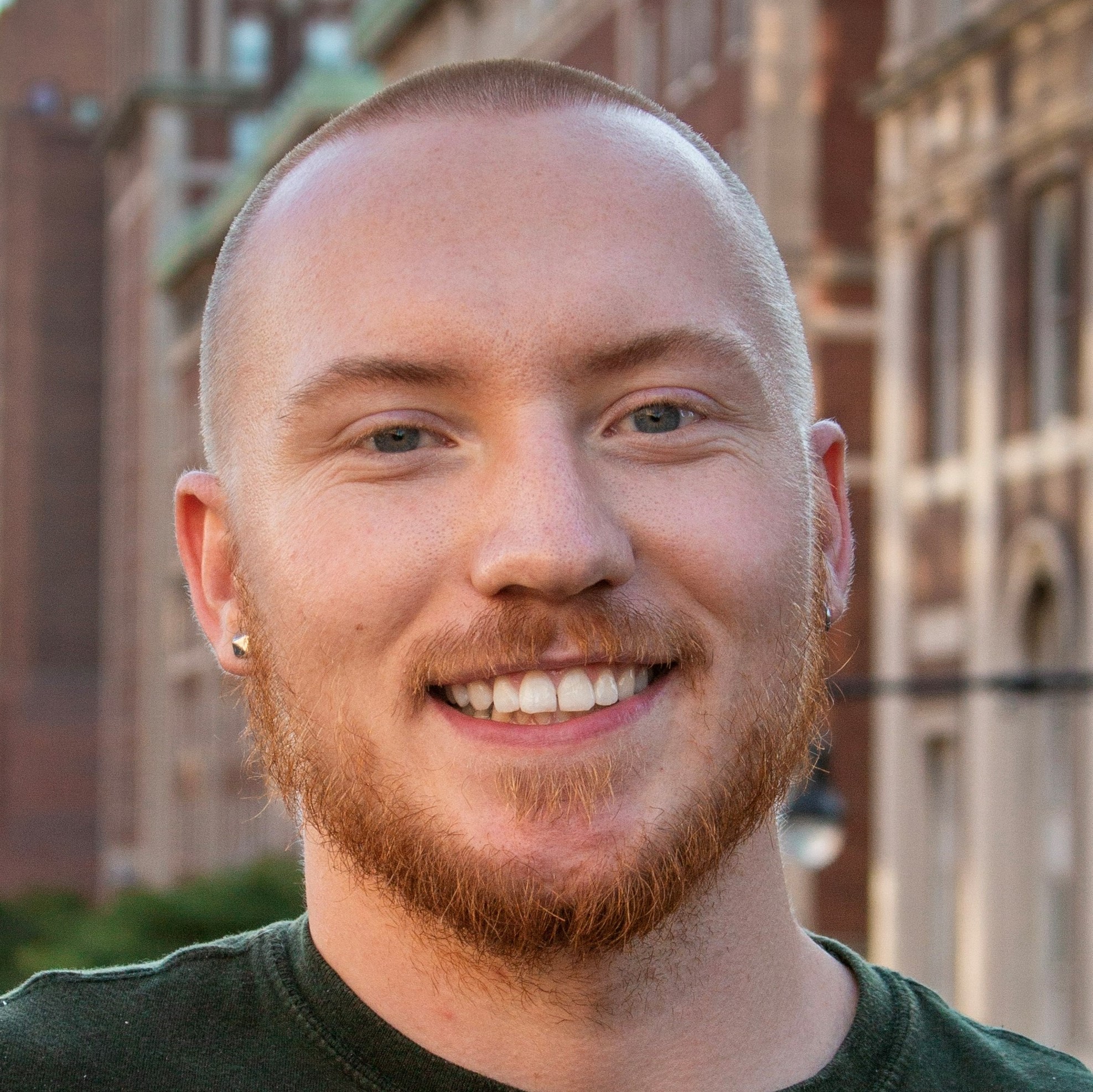
All right, well, thanks so much for joining us, Caleb. I think this is our second or third time having you on the show. I really need to Stop counting the number of times. I've had people starting every episode with the number of times they've been on the show. But for whatever reason, I can't fight the impulse. But. But anyway, thanks for joining us, Caleb. We're excited to have you on to talk about what's going on with policy here at the city level. We've been talking about the weact policy agenda, so I'm just excited to have this conversation. And before we get too far in, do you mind just giving a brief introduction of yourself and a little bit about your role here at We Act?
[00:03:00] Speaker B: Yeah.
[00:03:00] Speaker C: And I think this is the first time I've been on the podcast with my new role, actually.
So I am the New York City Policy Manager.
I mean, it is what it sounds like. Basically, my role is to manage and develop advocacy campaigns that promote policies consistent with EJ values within the executive, council and agency agendas of New York City. I also am the lead facilitator of our Extreme Heat Coalition, which is statewide, but is really focused on making sure that the most heat vulnerable communities are protected through programs, policies, and investment in resilient infrastructure to improve climate health. So, yeah, that's my role.
[00:03:52] Speaker A: Love it. You do a lot of things, and I think it's hard to sum up sometimes all the pieces of the work that you do, but we appreciate it.
[00:03:57] Speaker B: Yeah. Caleb is in my previous role, and I feel like I don't do as much as I didn't do as much as they did based on that description. So, like, that's a. That's an awesome description of that. That role, because it can capture everything that is. That it is at.
[00:04:13] Speaker C: I think you probably did so much that you forgot about a lot.
[00:04:16] Speaker A: That could be.
[00:04:17] Speaker C: That could be it.
[00:04:18] Speaker A: You blocked it out. It was too much.
[00:04:21] Speaker B: So. Well, in your role in New York City Manager, policy manager, you have to maintain all of the political things that are going on in the city, all the legislation, announcements, and things like that. And this is a special year.
It can be exciting year because we've got a lot of new things. We got a new mayor, we got some new agency leaders, we have a new city, some new City council members, and a new session for city Council. There's a lot going on in the city, but, like, what does all this change mean for climate and environmental justice across the city?
[00:04:50] Speaker C: Yeah, I mean, no one knows for sure, right? But there is definitely something in the air. I feel pretty cautiously optimistic. So Mayor Mandani has signaled that he's going to be a good partner in terms of our priorities. Some legislation that we act as champion in the last legislative cycle, he named on his campaign trail, for example, the indoor maximum temperature policy in his tenant bill of rights.
That actually is now Local Law 23 of 2026.
So just to give a little bit of background about that, I have been working on this for a couple years now with the Extreme Heat Coalition. Basically what the bill does is it makes it so that there is a basic requirement in housing that everyone has access to cooling at home and it sets a maximum temperature indoors. So with the cooling devices provided, it should be able to cool to 78 degrees.
This will be enforced by 2030.
So this is a long overdue sort of protection for the extremes that we experience in New York. We deal with climate crazy winter storms and we deal with extreme heat. And up until now there's never been any upper limit to what tenants are supposed to endure at home. And the result of that has been that on average about 500 New Yorkers die every year from heat exacerbated illness. So really happy to see his support on that and that we were able to pass that legislation and now we're prepping for the implementation and the rulemaking process.
He also supported the Community Opportunity to Purchase Act.
Shout out to Cameron, who is one of our fellows and then major part of the New York City policy team.
So the Community Opportunity to Purchase act would have given community land trusts and other affordable housing developers a first right of to purchase certain multifamily buildings when landlords sell. And it's modeled on the success of legislation in San Francisco and other cities.
And it would curb speculation and level the playing field so that nonprofits would be able to expand the supply of permanently affordable housing. So this is really about reprioritizing how the housing market works in New York City so that we're not.
There's not perpetual gentrification like it feels like we've all been dealing with. So the other parts to how environmental justice and climate action will show up in these next few years isn't just dependent on the mayor, but it does help to have executive leadership that is supportive and strategically appoint highly competent agency leads. Lisa Garcia was just named the Commissioner of the Department of Environmental Protection and Chief Climate Officer Louise Young. We've worked with both of these incredible leaders and seeing the work that they've been able to do. So that bodes very well. But the next ingredient for success lies in how quickly the new administration is able to assess management successes or failures in the city's commitments to its Climate and EJ goals and take the most efficient steps to deliver on these goals in frontline communities. Another part of this, though, is how well all of the pieces work together. Right. Mayor, city council and the governor all have to think about how to fund existing programs and projects, enact policy and stick to a cohesive vision for climate and environmental justice. And that's something that we've seen a little bit of inconsistency in the past year.
For one, I think at the federal level, a lot of the cuts to funding have led to significant deficits at the city and state level.
We've even had to participate in lawsuits to prevent the state from backtracking on CLCPA commitments.
And there's still sort of an evolving relationship with how the mayor and the speaker of council will work together.
So these are all these things where no one has a crystal ball to know exactly how it'll shake out, but a lot of the ingredients are pointing in a positive direction. So I'm going to choose to focus on those for now.
[00:10:13] Speaker B: Yeah, it's a delicate balance between all of these, these players, especially in a city like New York, because we still have to think about the federal, the state still, and how these people get along with each other. Who doesn't get along with each other? Also, like, sometimes, no matter how much you may support a candidate, sometimes their platforms are not necessarily geared towards some of the things that we support all the time. Right. So, like, all of the things were not necessarily climate related as far as priorities, but how do we make climate and environmental justice a priority in this new administration and City Council and these other members too? So I appreciate you being kind of on that front line for we act to sort all of that out and make sure everyone is on task. Because I know if I know anything about Caleb, it's that they will make sure stuff gets done.
[00:10:58] Speaker A: Nice stuff. Way to censor yourself in real time. Absolutely. And I also appreciate you kind of providing this a little bit of an overview of how things at the city kind of fit into this larger narrative of things that are happening at the federal level and state level.
It's all related. Right. The decisions that you make at the city level are determined and impacted by what's happening at the state and federal level. And it's actually really great timing that we are having this conversation after our conversation about state and federal policy because, yeah, it's helpful to have that context before we really drill into what's going on here at the city because at the end of the day, that's where we end up feeling it is right here in our homes, in our backyards.
And I also appreciate the reference to Lisa Garcia being appointed for Department of Environmental Protection. Is that right? We had her on an episode of our podcast a little over a year ago talking about what was going on in EPA region, too. So a little bit more of a regional understanding of what was happening for environmental justice, but now in a different role. But all that to say it's good that we get to kind of narrow down our conversation to look at what's happening here in New York City. So with that, I'm going to use that as a segue to start to drill into some of the things that I know are on our we act policy agenda here at the city level. Some things for you to tell us a little bit more about. The first one being the Environmental Justice NYC plan or the EJNYC plan. So we've talked about it before. We've talked about the EJNYC report before, but this is kind of the next stage of that. So based on the report, this plan developed to kind of have recommendations for the items that were found in the EJNY report is my understanding. So I think it'd be helpful just to have a quick refresh on what the EJNYC report is. I'm sure you can put it more eloquently than I just did. So, yeah, just maybe start there and then we can get into what it means for us here in the city.
[00:12:55] Speaker C: Okay, so just to rewind, this is now over a decade in the making. The bills that now led to the laws that resulted in the report and the mapping tool go back as far as I want to say, 2014 was the earliest one. But basically the EJNYC report is the result of a broad push from the environmental movement in the city to pass legislation which called for a study of environmental justice areas and the establishment of environmental justice areas portal. The other piece of this is Now Local Law 64 of 2017, which established an Environmental Justice Advisory Board and an interagency task force that would help develop a plan to address the issues identified.
So last year was it 2024? Now everything is blurring together for me.
But we now have an interactive environmental justice tool that takes GIS data and a wide variety of different data sets around social vulnerability, climate projections and past climate data. And you can sort of plug and play and understand how climate change will impact specific environmental justice communities across New York City. And along with that, there was a report that sort of gave A baseline understanding of what the environmental justice issues are at the time of writing.
Now we're in the stage of having the city develop a plan which is not just all theoretical, and we're going to sort of assign solutions just based on the quantitative data, but it actually requires a really robust community engagement process.
So that is definitely going to be a big undertaking.
And the EJ Advisory Board is really going to help shape what that process looks like.
So that's caught up to where we are now. But I think actually developing the plan and the solutions is the next step that we are wanting our members to tap in on. So we'll definitely be partnering with the Mayor's Office of Climate and Environmental justice to host opportunities for people to engage with that.
[00:15:49] Speaker B: And I think it's really important to mention that the idea that New York City is a city of plans, there's a lot of plans that go on the city time after time. And one of the things and critiques that we always have from the policy team is that we need things to be actionable and people to be able to actually do something with these plans, because they can be great. But if there's not any kind of momentum to do anything with these plans, it kind of becomes useless.
Another element that you mentioned, too, and I want you to talk a little bit more about this, is talk about the need for community engagement to be a part of this plan and developing. You know, Caleb, why. Why is community engagement really important when it comes to developing the EJ NYC plan?
[00:16:27] Speaker C: Yeah, I mean, the EJ Advisory Board was very clear on fighting to make sure that environmental justice principles were embedded into the actual process.
So what that means is that they cited the Hamez principles of democratic organizing to really center that. And according to the Hamez principles, it's really critical that communities are able to speak for themselves. A plan shaped without robust intentional engagement that captures feedback from the most impacted residents would not be representative of those values or. Or the problems that confront people every day.
And it's really important that in general, with any sort of adaptation or resilience investments moving forward, that the solutions are based in community, that community members are not just being dictated. This is how it's going to work. Because ultimately, the people that live in these neighborhoods are the ones that make solutions durable.
It's not just about, you know, the hard infrastructure of a place, but there's memory and planning and ingenuity that comes with people actually relying on one another and building skills to manage disasters. So that's ultimately what's at stake with, with climate change is that we're going to be faced with more and more events that, you know, we thought would be one in a million, though they're coming much more frequently and with much more force than we've ever seen before. So that's what, what really counts.
[00:18:32] Speaker A: Thanks for that. And you know what sits with me when I think about the idea of making a plan without community input? It's like at the end of the day, whatever you build, even if it's like a road, a sidewalk, a building, people have to use it. And if you don't take people's input into consideration, they're going to use it in ways that you didn't intend and maybe in ways that are not beneficial to them and, or that thing is not going to serve them in the way that they actually.
But, but I appreciate you kind of giving that summary. I know it's as you mentioned, it's been a long process of this, this plant, the report and then the plan, then here, here we are now and the, the importance of community engagement as a part of that. But, but I know there's a couple other items that, that are on our priority list for the, for policies in New York City. So I want to leave time to, to talk about some of those other items as well. I know one of those other items, East Harlem Climate and Community Master Plan, which I don't think we've actually covered yet on the podcast before. So it's actually a new topic that maybe we'll have to dedicate a whole episode to at some point. But for folks that are less familiar with that, I know that we has done some work in East Harlem before. So just to give a little bit of that background about some of that work that we've done previously, maybe we can start there before we get into the new stuff. So do you mind just giving us kind of a high level overview of some of the work that we've kind of done previously in East Harlem?
[00:19:55] Speaker C: Yeah. So again, all of this is like a big rewind way before my time, but we worked with a number of different community groups. I think it was over or around 40 community groups, city agencies and elected officials to develop the East 125th Street Community Visioning Action Plan in 2019, which had a number of different recommendations to ensure that the change brought to the Second Avenue subway line is beneficial to existing residents of East Harlem.
Of course, this year we also have heard in the governor's state of the state, there's some changes to the plan to Extend the second Avenue subway line.
So there's an adaptation there in the way that we'll pursue the next project.
So a lot has changed since 2019, but we also are looking to expand the planning process from beyond East 125th. There's a lot that the community of East Harlem is confronted with at this particular moment that we want to make sure is fully addressed.
And the visioning plan.
[00:21:20] Speaker B: Yeah, I think a lot has changed since 2019 is an understatement, because we all remember what happened that year, that forgotten year called 2020. And there was COVID lockdowns, there were a lot of protests, There was a renewed sense of what environmental justice is, what racial justice is. And so there was a lot that's changed, but also a lot of things that couldn't move forward because of some of the things that were impacted by Covid. So the plan itself that was created kind of had to take a little bit of go to like the back burner. So a lot of things could not happen. But there are a few things that the city has done in that time frame to address some of the concerns or issues that were brought up in that plan.
So what were some of those things that the city has done to address some of the kind of climate issues that are affecting East Harlem?
[00:22:07] Speaker C: Yeah, I would say everything is always a work in progress. To say addressed climate issues or environmental justice issues in the past tense is not a real thing anywhere. But there has been landmark legislation such as the Urban Forest Master Plan.
We worked alongside the Forest for All NYC Coalition and within the Extreme Heat Coalition to really fight for this bill.
Basically, it calls for the equitable expansion of urban canopy to reach 30% coverage citywide.
And neighborhoods like East Harlem, because of this law, are being prioritized for new plantings because agencies are tasked with using the heat vulnerability index scores to make sure that the most vulnerable communities are getting their fair share of shade and all the other environmental services that trees offer.
Also, late last year, the Harlem River Manhattan Greenway project broke ground.
This is a major capital investment led by the Economic Development Corporation at the city level. And there are a number of different agencies collaborating on this project. But it's a long overdue investment that's leveraging funding from both the capital project budget from the city and the Environmental Bond act to create seven acres of new waterfront parkland and greenway connection in East Harlem. So those are some pretty notable shifts that I think are exciting. But there's definitely more we can do to help shape like a long term vision and get more community voice and investments to come.
[00:24:13] Speaker A: It is exciting to hear about all these different pieces, all these different projects, you know, thinking about expanding green space, transit options and dealing with extreme heat.
There's, as anyone who's listened to more than one episode of the podcast, there's so many layers when you think about environmental justice in a particular community, there's so many layers to it, both the climate dimension, but also just access to resources and whatnot. But you kind of alluded to, you know, what's on the horizon. You know, there's lots of work still to be done there. So I'd be curious to hear about any upcoming kind of renewed efforts in this area that you want to talk about things that are on the horizon for work that's still to be done in East Harlem.
[00:24:55] Speaker C: So the new plan is really meant to be a holistic view taking into account what community members want to see in terms of improvements to climate resiliency, health equity, community cohesion and places for gathering and sort of place making, as well as like political engagement.
And so there are several pieces to this, but we act is working to get this clearer view from community members in East Harlem by hosting a year long community outreach process where we convene a steering community with members from various different areas of expertise and developing a report on the challenges facing East Harlem and the community based solutions to address them.
And once we have the report, we're committed to advocating for funding to make it happen because we know that there can be a ton of really compelling, well thought out community based participatory research that exists. But without the pressure and real long term, sustained support for the recommendations that we're able to find, it could just sit there like we really have to be vocal about why this matters and the urgency with which it's needed.
[00:26:53] Speaker B: Well, thanks for explaining that, Caleb, as well for the East Harlem plan and work that we plan on doing there. It's also like we've got two plans going on and Caleb is going to make sure that those things are underway and going as they're supposed to. But there's one more thing that I think we should talk about a little as far as a priority at the city level and that's looking at organic waste diversion. I am the one who created that term for this catch all for basically talking about community composting for our policy agenda. I know a lot of our listeners have heard quite a bit about composting from a couple different episodes that we've done so far on the podcast, but compost can you just kind of give our listeners a little bit of a brief reminder of how waste is connected to environmental justice?
[00:27:41] Speaker C: So, first, it's really expensive. Transporting or exporting our waste costs roughly $450 million annually. This is just for garbage.
So to think about the scale of what it takes to remove just our waste without thinking about having cleaner waste streams, that's already what we're up against. But second, it contributes to environmental racism because landfills and incinerators are mostly located in black and brown neighborhoods, exposing residents to harmful fumes and particulate matter that directly result in health problems.
And aside from the local impacts, having all of that rotting waste warms the planet.
Landfills and incinerators are huge sources of carbon dioxide and methane, which are powerful greenhouse gases that directly contribute to the warming of our planet. And trucking our waste to landfill locations as far as Ohio or South Carolina, other EJ communities in the country result in even more carbon dioxide emissions being released into our atmosphere.
[00:29:08] Speaker A: Thanks for that, Caleb. And in case anyone is, like, just so jazzed up, I know this is an exciting topic, and it's something that I think pretty much everyone can relate to because at the end of the day, we all generate waste. We all have organics, we have plastics and other products and things that we use every day that go into the waste stream. So it's something that we can all relate to. So if anyone is really jazzed up about this topic, like Lonnie said, we do have some other episodes. We'll make sure to link those in the show notes. But thinking of the moment that we're in now and a lot of things that are on the horizon, again, this is all kind of tying into the WE act policy agenda for 2026. So I would also love to hear from you, Caleb, about what's going on now, how is we ACT approaching this issue and what's kind of on the horizon for this year that's on your mind? And just what's going on for organic waste diversion here at the city level?
[00:30:01] Speaker C: WE ACT is leading the Save Our Compost Coalition.
And there are a number of organizations really invested in supporting and expanding community composting to uplift environmental and climate justice.
And they're focused on getting more funding for neighborhood composting initiatives and related legislation.
And yes, the landfill piece is a huge driver of this. But I think one way that I feel like a lot of people have started to care more about waste diversion is the fact that it reduces food available for pests like roaches and rats. That's, I think, the sort of popular way that people are starting to recognize, oh wait, we don't have to live like this.
So I think on a local level, seeing less of that just by making sure that organic waste is safely disposed of and can be repurposed for local community gardens and support local food sovereignty, I think that's another piece of it that is pretty exciting for a lot of people. And our Climate Justice Working group is really leading the charge there, developing campaigns to educate northern Manhattan residents on how to properly sort waste at home, which it really doesn't have to be as complicated as it can sometimes seem, but it can have a major impact globally.
And I think it's one way for us to think more holistically about food systems in general.
[00:32:06] Speaker B: Well, Caleb, it sounds like you have a lot on your plate to get through this year, but we appreciate your leadership in a lot of these spaces to make sure these things kind of come through. So making sure the EJNYT plan comes together and working with city officials and community members. And then again, same thing with East Harlem residents and the East Harlem Commitment and Community Master Plan and also think about organic waste diversion. So we look forward to like what kind of comes of some of these things that you're working on at the city. I know there's more things that they're working on, but we can't fit it all right now in this one. But I think these are some top ones that we wanted to highlight for everyone. And if anyone's interested in being a part of any of these kind of initiatives, I definitely recommend everyone join our social media platforms, have it sign up for our newsletter because that's where we're going to be able to communicate when we time to take action.
We have working groups that are going to be working on some of these projects as well that you can get involved in too.
[00:32:59] Speaker A: Thanks, Lonnie. And we'll make sure to include links in the show notes for some of those episodes that we mentioned, but also for the React 2026 policy agenda. In case any of these topics piqued your interest and you want to learn more, read some of the other things that are on our policy agenda. You can check that out. But thank you again, Caleb. I'm pretty sure we'll have you back on the show very soon to talk about some things that are going on with the city budget. I think you alluded to that earlier earlier on in our conversation, so we'll have to have you back to talk about that soon. But thanks for joining us today.
[00:33:30] Speaker C: Thanks for having me.
[00:33:37] Speaker A: Thank you for listening. If you liked this episode, make sure to rate and review the show on whatever platform you listen on. If you have thoughts about the show or suggestions for topics you want us to discuss, we encourage you to reach out to
[email protected] check out we act.
[00:33:53] Speaker B: On Facebook at weact for EJ that's W E A c t F o R e j on Instagram, bluesky and YouTube at weact4ej. That's W E A C T number 4ej and check out our website weact.org for more information about environmental justice.
Until next time, Jinx.
[00:34:16] Speaker A: Sa.