[00:00:00] Speaker A: Foreign.
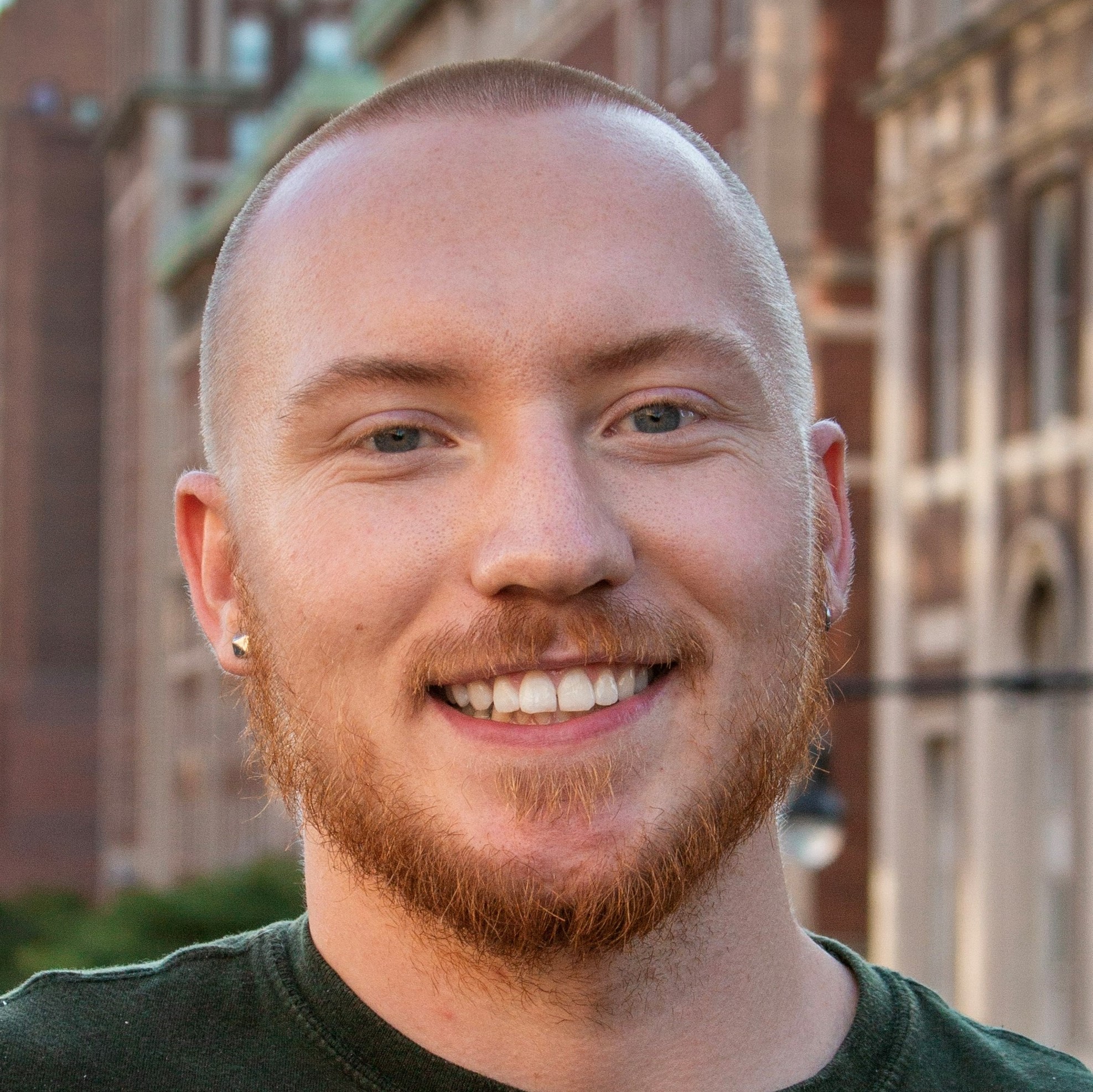
[00:00:17] Speaker B: Welcome to Uptown Chats, a podcast where we share stories about environmental justice by and for everyday people. I'm your co host, Jaron.
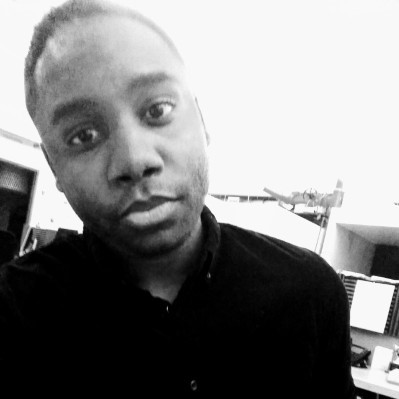
[00:00:25] Speaker A: And I'm your other co host, Lonnie. And.
[00:00:27] Speaker B: And today we are continuing our conversation about money, but this time our focus is on city and state budgeting here in New York.
[00:00:36] Speaker A: Yeah, we're talking a little bit about how our tax money is going to be spent on us, but I'll be sharing some information about what some of our priorities are for the state budget and to help us cover the city budget. We'll have our city policy manager, Caleb Smith back on.
[00:00:50] Speaker B: That's right. But before we get to that, Lonnie, can you share weac's mission?
[00:00:54] Speaker A: I can, but before I get to the mission, I want to remind folks that earlier this month we, we launched our Uptown Chats hotline where listeners can call in with questions they have about climate and environmental justice. So if you got questions, call 877-Uptown-6. That's 877-Uptown- 6. You might just make an appearance in the show.
Now I'll read the mission.
[00:01:14] Speaker B: Thanks, Lonnie.
[00:01:15] Speaker A: WEAC's mission is to build healthy communities by ensuring that people of color and low income residents participate meaningfully in the creation of sound and fair environmental, health and protection policies and practices.
[00:01:26] Speaker B: Thank you.
Now we can go ahead and talk about the budget. I know it has been a while since we talked about anything budget related on the podcast. So Lonnie, let's go ahead and just give a quick overview about how budgeting works here in New York and what the relationship is between the city and state budget. What do you say?
[00:01:44] Speaker A: That sounds good. It's always good to have a little refresher on some of these processes that go on behind the scenes when if you're not working in it every day, it can be a little bit daunting. So we can run through that.
So I'll start with just saying that there are three different types of budgets. There's an expense budget which covers cost of like running a city and state. So think of things like waste collection or library programs. And then there's capital budget which covers larger long term investments in like facilities and infrastructures and building projects. And these are called capital projects. And then there's the revenue budget which outlines money expected from taxes, state and federal aid and other sources of revenue.
We act budget priorities are usually expense budget asks.
[00:02:26] Speaker B: That's good to know. Who knew there were so many different types of budgets? I feel like most people just think of, well, what's my budget? How much can I spend?
But both the city and state budget cycles do have some overlap with the final state budget that's due on April 1st and the city budget that's due by July 1st. So it's related, but separate timelines. And these are when the fiscal year air quotes there fiscal year starts for each of those, which is different from a typical calendar year that starts in January.
[00:02:57] Speaker A: Exactly. And for the New York City budget process, it starts in January when the mayor's preliminary budget is released. This budget is usually a reflection of mayor's priorities for the different agencies. It is informed by their campaign platform and fiscal projections, things like how much money the city's going to bring in, whether it be from the state or federal government.
[00:03:17] Speaker B: Yeah.
And the state budget process starts a little bit earlier. So from October to December, the governor's office, the Senate and Assembly start formulating their priorities. And this is often when we act's policy team has conversations with legislators to advocate for what we want to see in the budget. All of this preparation is for the governor's state of the state in early January, where they highlight some of their budget priorities, and then the official executive budget usually follows right after. So the idea there is to kind of start to have those conversations earlier before they actually end up in the governor's budget and before they're official, obviously.
[00:03:59] Speaker A: Yeah. And now that both budgets are released and have been released in January, there are usually internal discussions, public hearings, many news articles and analyses that go on until the final budgets are released at the city level, usually in March, the City Council gets a chance to respond to the mayor's preliminary budget that was released in January.
And think of this as like edits and suggestions that reflect the priorities of city Council members, not just the mayor.
[00:04:25] Speaker B: Yeah. So similarly, on the state level, where the Senate and Assembly get to respond to the governor's budget and release their own budget priorities, known as the one House budget.
And by May, before the final budget is passed, three people in a room hammer out the final details and negotiate. And those three people are the speaker of the Assembly, Senate Majority Leader and the governor.
[00:04:50] Speaker A: Yep. And in June, the City Council and mayor's office negotiate the budget through respective budget negotiation teams until there's what's called another air quote here, handshake deal between the mayor and the City Council speaker, and it's sent to city Council for a final vote.
[00:05:06] Speaker B: Yeah.
Hopefully that gives some more context for how budgeting works at the city and state level in New York, especially for folks who are less familiar with this process. I know that includes me. So thank you, Lonnie, for giving me even this little bit of a rundown. I know I know the basics, but this was actually a good refresher for me too. But with that in mind, let's go over some of we ACT's budget priorities this year, starting at the state level.
[00:05:27] Speaker A: Yeah, I can get into that. Yeah, these are. Sometimes we have to give a little quick and dirty explanation of these things, but we also make sure we try to educate everyone in lots of different platforms. So always look out for webinars or membership meetings where we kind of go through some of these things in more detail.
But let me go over some of the state budget priorities relatively quickly since I know a lot of WEAC members and listeners are going to have the opportunity to engage more at the city level and I want to make sure Caleb has enough time to break that down in more detail. But at the state level, we're asking for funding for programs that support energy affordability and climate solutions. These programs are $1 billion for the Sustainable Futures Program, $200 million for the Empower plus program, and $200 million for the Green Affordable Pre Electrification or GAP Fund. All of these programs provide much needed money for communities to transition away from fossil fuel use and increase energy efficiency for their homes to help lower utility bills.
[00:06:23] Speaker B: Yeah, that's exciting to hear. I know that right now we're in this time period where you have some competing things. You know, people are thinking about affordability but also energy transition and trying to comply with local 97 greenhouse gas reductions that buildings need to comply with. So trying to make sure that folks have the money to make the improvements and changes to help reduce the greenhouse gas impact from their buildings.
And now that I'm working on the Manhattan Clean Energy Hub, which, spoiler alert, we may have an episode coming about that.
I know how important it is to fund programs like Empower plus but also Pre weatherization work through mechanisms like the GAP Fund that helps people make these improvements.
But what are some of the other priorities for we act at the state level?
[00:07:06] Speaker A: Yeah, naturally we don't do all of this alone. We also have a lot of different partners throughout the state and city that we work with a lot of times with our budget ask. And so we're also supporting coalition budget parties as well. So we act Co Lead's Just Green Partnership and Let Free Kids Coalition with Clean and Healthy New York. In these spaces, we are asking for $500 million for the clean Water Infrastructure act in line with recent years and for at least $100 million of that funding to be dedicated specifically to lead pipe replacement. We have episodes on lead poisoning, so definitely check that episode out if you want to learn a little bit more about lead poisoning in New York. But we're also asking to support key line items in the New York State Environmental Protection Fund, which include funding for the New York State Children's Environmental Health Centers, Pollution Prevention Institute and Interstate Chemicals Clearinghouse, and formalizing funding for the New York State center of Sustainable Materials Management and their work to standardize and expand the state's green procurement specifications.
[00:08:09] Speaker B: It's a mouthful, isn't it?
[00:08:11] Speaker A: It really was.
[00:08:12] Speaker B: Well, all that to say there's lots of things happening. And like you said, Lonnie, this work is being done in coalition with other partners and organizations. So stay tuned. And who knows, maybe we'll do an episode about one of those specific items later this year. But as someone who doesn't spend as much time in this advocacy space, it is helpful to hear about what some of our priorities are for the state budget.
Well, with that, should we go ahead and hop into our interview with Caleb to hear about what's going on with the city budget?
[00:08:40] Speaker A: Let's do it.
[00:08:50] Speaker B: Well, thanks so much for coming back so soon, Caleb. I know we had you on recently to talk about, to talk about the WEAC 2026 policy agenda, specifically some of those items that are focused here at the city level. But we wanted to have you back to talk a little bit about what some of our budget priorities are specifically. I know some of the items that we talked about last time may or may not have a budget ask attached to them and there's some other items as well. So that's kind of our focus. But before we get into that again, I just want to ask you to briefly introduce yourself again for folks that haven't listened to that episode. You should go back and listen to it if you haven't. But yeah. Do you mind just introducing yourself again, Caleb?
[00:09:32] Speaker C: Yeah. So hi again, everyone.
My name is Caleb Smith. I am the New York City Policy Manager.
So really quickly, I am charged with managing and developing relationships with city elected officials with leading advocacy campaigns that promote policies consisted with EJ values within the council, the executive and agency agendas of New York City.
[00:10:04] Speaker A: So yeah, and part of your, your, your role here at WE act is also looking at the money, the budget, what's going on in the city. A lot of the work and things that we want to do here require some form of funding in, in some Way, shape or form. And this is a, every year thing that happens. Right. With any, with any mayor administration, every single year there needs to be a budget to kind of, you know, look at how are we funding a lot of the work that we, that we want to see done and also maybe pass legislation and things that have, have passed that also require some type of funding, which is slightly different than how the state maybe does budget related things when it comes to legislation. So we know we've got quite a few things on our list, but we wanted to bring back Caleb just to kind of talk about a few of those things kind of high level really quickly of like, what are we asking for in the budget? What kind of things are we going to be advocating for and also asking for your help to help us advocate for funds.
[00:10:58] Speaker C: Yeah, I mean, in a lot of ways the budget is where we see a real commitment to the values that the city says that it has.
Because if we have all these things that we say that we're doing that aren't paid for, we're not doing them.
So one area that again has been something that I've worked really closely on with the Extreme Heat Coalition is before we got to the point of being able to advocate for funding, is getting a bill passed that codifies the cooling center program into the city charter. And this is because cooling centers are a part of a critical emergency response to extreme heat. But they've never received dedicated funding for them to operate. So all of the partnered locations, the libraries, senior centers, recreation centers, and some private entities that operate as cooling centers, they're doing it just on a regular ad hoc basis. And if it's a private institution, they're not getting, they're basically volunteering to act as such.
So now, given that we have it in the charter, it's time to allocate funding so that the centers can run beyond a business as usual schedule. So we've seen this be a successful strategy in other cities. And recent analysis from the independent budget office shows that this is just one way that we can start to really tackle Extreme Heat in a more thoughtful way.
[00:12:48] Speaker A: Yeah, I think that's one of the top examples of how the city budget process works. We go through, we pass a bill that we're excited about. But then there is the funding component, like you said. I think right now, I think NYSIM and the cooling center program doesn't really have any true dedicated funding. Correct.
[00:13:07] Speaker C: Nisim has funding, but the program itself that cuts across a number of different city agencies does not have a Dedicated budget for the program to operate.
[00:13:23] Speaker B: And for context, again, nice. New York City emergency management. Correct. Great.
Thank you for that, Kayla. I think that's a really important one to highlight. I know for a lot of people extreme heat is a little far from their mind right now, but it is something that we experience every year and we see an increasing number of deaths and burnt heat department visits and other impacts from extreme heat events. So very, very important that funding be allocated to support this work. But I know there's some other items as well on that we're thinking of for funding to make sure that they are funded. So I'd be curious to hear what else is on your radar that needs funding at the city level.
[00:14:02] Speaker A: Yeah.
[00:14:02] Speaker C: We're also part of a coalition advancing the Green Healthy Schools initiative.
This would be a significant transformation of our educational settings in that it would electrify schools and significantly tilt the needle in terms of green job creation, emissions reduction, better educational outcomes for students, and environmental health conditions at schools for student and faculty.
So when we're talking about electrifying schools, we're talking about removing that reliance on fossil fuel boilers and switching to electrified heating and cooling systems. And that helps remove air pollution, it helps reduce greenhouse gas emissions and helps reduce asthma triggers for students, which asthma absenteeism can have real lasting impacts on students educational outcomes. So this is something that we would love to see funded in this cycle.
[00:15:13] Speaker A: Yep. And schools being one of our bigger polluters here throughout the city, it's important that if we have the opportunity to put money towards decarbonization or reducing the pollution and the environmental health risks that are within our schools, we should definitely be putting in prioritizing those funds as well. And another thing, one item that you talked about that was one of our priorities is the New York City Environmental Justice Plan or the EJNYC plan and doing that work and completing that. Can you tell us about what the budget connection is to that particular priority item for we act?
[00:15:47] Speaker C: Yeah. So essentially in the last episode I talked a lot about the principles that are baked into the process of developing the EJ NYC plan.
You can't have EJ without communities actually being a part of directly telling their story.
And so that costs money. You have to really invest in a thorough and holistic community engagement process.
And up until now we haven't had that be something explicitly allocated in the budget. So that's something that it's definitely time for it to be in the city's funding priorities.
[00:16:44] Speaker B: It's helpful to hear the budget ask attached to that. Because I remember our conversation recently just thinking about the process of engaging community members and something as robust as a citywide plan thinking about environmental justice. And my thought was that sounds like there should be money attached to that. Sounds like that's a lot of work. And it's good to hear that there is an actual budget priority that's being attached to that to make sure that there is funding to do that work in the way that needs to happen. But one of the other things I know that's on our budget priority list is it's funding for parks. I know that we ACT has been doing work for quite a long time to make sure that folks have equitable access to parks. But I'm curious what the budget ask is currently for supporting that work.
[00:17:33] Speaker C: Parks mean a lot for New Yorkers. I mean, there's. We live in a landscape that is so developed that if we didn't have have parks, we'd probably all lose it. They keep us sane. They clean our air.
They're incredible tools for mitigating the impacts of climate change, whether you're talking about cooling down our communities or capturing stormwater.
And yet, if you know the budget is a values document, which it is, why is it one less than 1% of the city's functioning budget?
So it takes a lot to maintain and care for these parks, and we need the funding that doesn't leave, you know, our small neighborhood parks behind because they don't have private funding to care for them. So that's really what's at the core of our parks, our backyard campaign.
[00:18:42] Speaker A: Those are some great things that kind of highlighted some things that we ACT is really kind of deep into when it comes to the budget. But we also want to support a few other things, usually in coalition with some other folks. Can you just kind of run down those other few items that we're looking for in the budget? And we're working with a lot of different partners across the city to get these things added to the final budget.
[00:19:04] Speaker C: So, yeah, our coalition work is a big chunk of what we do at we act. I mean, I think we have power in numbers in the EJ movement. And so some things that we are working for in coalitions are funding for the Bureau for Coastal Resilience to be fully staffed up, funding for more access to community composting, and a program to ease the transition to heat pumps for one to two family homes.
So, yeah, we definitely have our plates full in this area, but it's not just on us. We're working on it with a number of great organizations really invested in the next steps for New York City.
[00:20:00] Speaker A: You know how people always say like Queens gets the money. I feel like we should say like EJ gets the money.
[00:20:04] Speaker B: Manifest, manifest. I love manifesting things into reality.
I know we only have so much time to cover all the items that are budget priorities here at the city level, but I appreciate you kind of walking us through at least at a high level and getting a little bit more detail on some of those items. I will say to our listeners if you were sad that we only talked about any of these items for a short time, email us and let us know and we'll have a whole episode. You'll get what you asked for. We'll have a whole episode about some of these items. But at least for now, it's helpful to hear what's on the radar. What of the priorities that we are pushing for. Have a budget ask attached to them. We always say show them the money. And like you said, if something is important, that means we need to attach. We need to show it with the dollar bills, make sure that there's funding attached to it.
So any last thoughts from you, Lonnie, about some of these items? I know that city policy is near and dear to your heart, so anything that you wanted to add?
[00:21:01] Speaker A: No, only thing I want to add is that there's going to be opportunities for you all to engage in some of these budget wins that I'm going to manifest that we're going to get. And so always check our show notes and again, continue to follow the newsletter and our social media sites to see how you can get involved for this environmental justice funding fight.
[00:21:23] Speaker B: Thank you and any parting words from you, Caleb. We've had you back on two times in quick succession, so I always like to give folks the final word.
[00:21:32] Speaker C: No, I'm just happy to be here and yeah, excited for the year ahead. So thanks for having me on.
[00:21:47] Speaker B: Thanks for listening. If you liked this episode and subscribe, make sure to rate and review the show on whatever platform you listen on. If you have thoughts about the show or suggestions for topics you want us to discuss, we encourage you to reach out to
[email protected] or call our Uptown Chats Hotline at 877-uptown6 check out we
[00:22:06] Speaker A: act on Facebook at weact4ej that's W E A T T F O R e J Instagram, Bluesky and YouTube. Weact4ej that's W E A C T number 4ej and check out our website weact.org for more information, Environmental justice.
[00:22:23] Speaker B: Until next time.
[00:22:25] Speaker A: Bye.