[00:00:00] Speaker A: Foreign.
[00:00:18] Speaker B: Welcome to Uptown Chats, a podcast where we share stories about environmental justice by and for everyday people. I'm your co host Lonnie.
[00:00:24] Speaker C: And I'm your other co host Jaron.
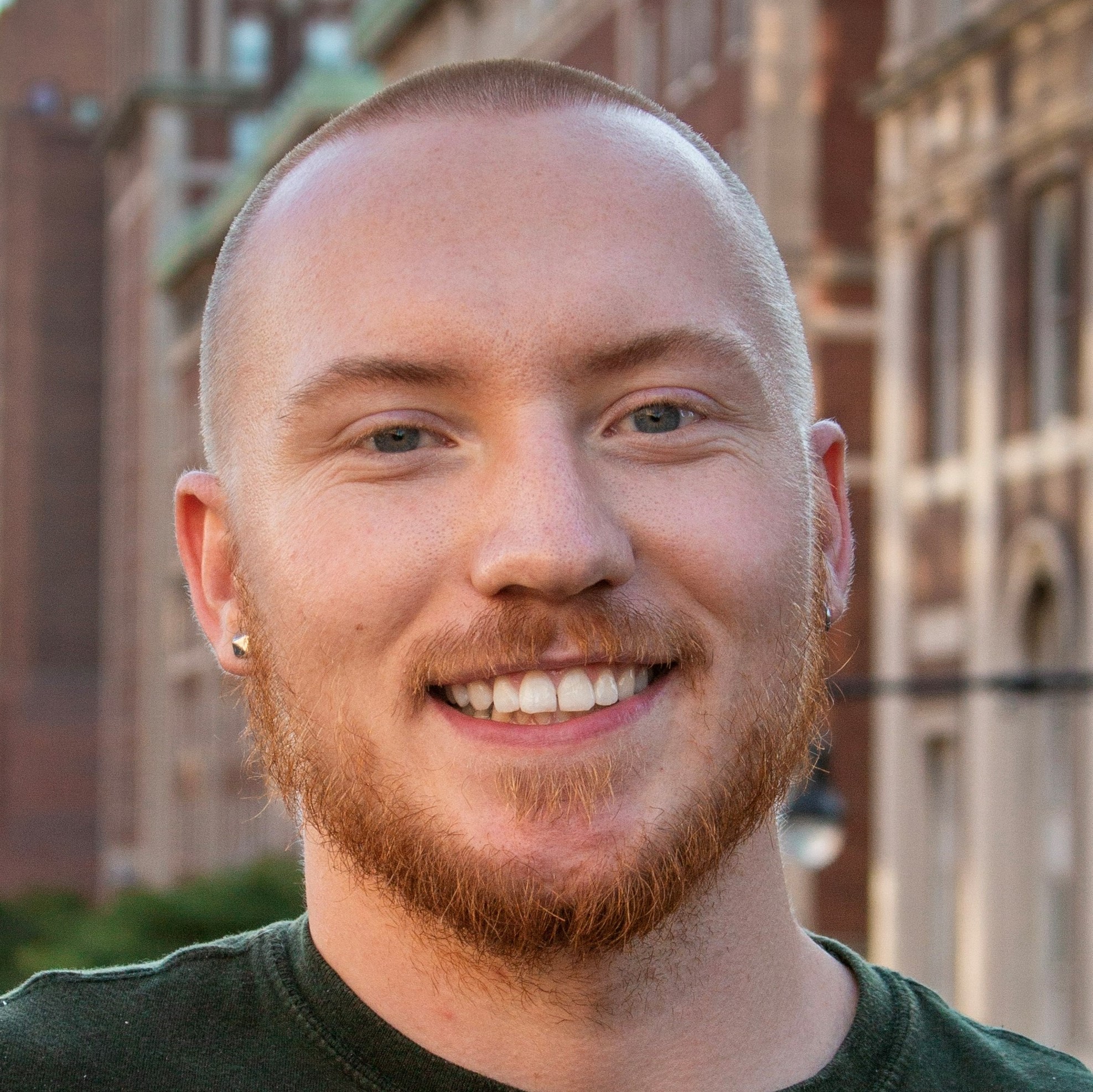
[00:00:26] Speaker B: And today we are welcoming back Eric Walker. We asked Senior Policy Manager for Energy justice to continue our convers about energy justice. Last time we heard from Eric about the landscape of energy policy in New York and the work WE ACT is doing to protect our landmark climate law called the Climate Leadership and Community Protection act, or the clcpa.
[00:00:45] Speaker C: Exactly. This time around we'll be talking with Eric about energy justice at more of a higher level just to learn about the intersection between energy race policy and a whole lot else. There's a lot that we will be unpacking with Eric, so it's a great episode.
[00:01:03] Speaker B: Absolutely. But before we get ahead of ourselves, Sharon, can you share WEAC's mission?
[00:01:08] Speaker C: I sure can. WEAC's mission is to build healthy communities by ensuring that people of color and or low income residents participate meaningfully in the creation of sound and fair environmental, health and protection policies and practices.
[00:01:21] Speaker B: Thank you. Before we jump into our interview with Eric, I want to encourage everyone to go back and check out our previous episode. If you want more more context for what is happening in New York with energy policy and the clcpa. We have got a link in the show notes for you if you want to go check that out.
[00:01:39] Speaker C: Yeah, it really was a great conversation with Eric and shed some light on some of the work that WE ACT is doing in this space. But don't worry, you can still enjoy this episode if you haven't listened to that one. Maybe this episode will pique your interest and motivate you to go back and listen to it afterwards. So either way, stay tuned.
[00:01:55] Speaker B: And if you're curious at the time of this recording, the fate of the CLCPA is not completely finalized, but once it is, we will make sure we will sneak it into an episode just to give you all an update. With that said, let's go ahead and jump into our interview with Eric.
[00:02:08] Speaker C: Let's go.
Well, thanks for joining us again, Eric. I know that you're making up for lost time by us taking so long to get you on the podcast. We're going to have you back to back, get you as much air time for our listeners as possible. But before we get too far in, can you just do a brief introduction about yourself and your role here at WE act?
[00:02:37] Speaker A: I am the Senior Policy Manager for Energy justice, which essentially means I am the resident energy nerd across all things, all energy policy that impacts low and moderate income people, environmental justice and disadvantaged communities.
[00:02:55] Speaker B: Eric, thank you so much for that. I kind of want to take a little bit of a step back and kind of think about what energy justice actually means at the depth of everything that we're talking about. So kind of like my first question is, how does race specifically shape who bears the greatest burden of energy, poverty and pollution? And is that relationship getting better or worse in your opinion?
[00:03:21] Speaker A: So race is a big component of pretty much every facet of life in the United States. And so energy is no different. And that shouldn't be surprising to folks who have an understanding of how racialized our society is, particularly the way it's racialized in the United States.
And so when it comes to energy, you see some of the kind of easily stackable relationships. So we have a housing policy that is highly racialized.
Brown people in particular are warehoused in certain places, some of it through historic housing policy and some of it through financial policy like redlining and such, that when you look at the composite index of those things, right, you stack housing policy, financial policy, and see where brown people, black and brown people live.
You see and you throw on where energy infrastructure is. You get to notice a correlation between where some of the highest polluting facilities are in our energy system and in our other all forms of our infrastructure. Whether those are sort of transportation, waste transfer transportations or waste transfer stations, they're all located in places where black and brown and low income people live. And so again, our dirtiest generating stations, the places that spew out the most particulate matter and emissions, are generally where brown people live, particularly in the city. It's really, really awful.
One study I think from 2022 put it at 1900 deaths related to PM2.5 in New York City alone.
That is an alarming number of people who die every year just from air pollution and that specifically from combusting fossil fuels. And that's not, I think essentially by any number of coincidences that is par for the course around the way we've driven really awful infrastructure out of bulkier and more elite neighborhoods into lower income and communities of color for as long as I understand anything that this, that this, the law Capital S state has done.
Now do I think that's getting worse? I think it's maybe hard for me to say off the top of my head, but I imagine that it's persistently bad enough that it should not remain this way. Right? That's the sort of grand takeaway. It doesn't matter if it's getting better or worse. It has been so persistently bad and so persistently harmful that it should not continue to be this way. And so we have a couple of state rules around what they call peaker plants. These electric generating station. Come on. When the demand for electricity is really, really high, they are most often the worst polluting facilities. They're supposed to be phased out by 2035.
And if we don't get off the fossil fuel system soon and replace that generation with some other form of capacity, we will keep those peaker plants on past that expiration date just for system reliability needs. And that means more people are going to be exposed to it, more people are going to die. And that's not something that state policy should really do.
[00:07:27] Speaker C: It's a very bleak way of putting it. But I appreciate it, Eric. Sometimes the reality is bleak in a lot of these cases, so there's no way of dancing around it. But I appreciate you really touching on and shedding some light on the pollution dimension of our energy infrastructure and the siting of of those facilities and that infrastructure in the same neighborhoods, predominantly of people of color. And I think the other piece that we didn't get into here, but I would encourage people to go listen to one of our other episodes with Dr. Diana Hernandez getting into the energy burden piece of it. I think that's also kind of in this dimension of energy justice, of thinking about as a part of disproportionate impact, is who's disproportionately burdened with their energy bills and utility debt and how that's also, to your point, impacting the same people who are impacted by the pollution from these facilities. So we'll have a link in the show notes for folks to go back and listen to that as under this umbrella of energy justice, thinking about energy burden and the burden of utility bills and how that kind of ties into all this. But something I wanted to kind of jump off from here is just diving more into that term justice. You know, we use it a lot. We even use it in this concept of energy justice, but it's a little bit ambiguous for some people.
And it's nice to provide a little bit more clarity of, like, what we mean, like, practically and like in, you know, the environment that we work in and in real life. So can you talk a little bit more about how you would explain energy justice to people? Like, let's say, you know, you pull someone off the street, no context. And how do you explain to them what energy justice is? Like how would you kind of explain it in simple terms?
[00:09:27] Speaker A: So for me, energy justice is a really hopefully simple thing. It just means that the, all the pipes and the wires that make our buildings go and all the other things that are powered by electricity, natural gas, for now, go, should be accessible to people.
They should be affordable to people.
They shouldn't have to worry about dying from exposure to what comes out. The other end of the dose will wires and pipes.
And they should have essentially some ability to understand how the decisions are made around where they go, what it costs, and who gets access to the stuff that comes out of it. Right.
I think that's pretty simple to me. Right. It's, it really is that simple. And so there are three kind of basic dimensions of that sort of stool. And to me, who gets to benefit from things like the costs?
So rooftop solar, for example, for a long time and even to a large degree now, rooftop solar has been something that's only really been the domain of upper middle class, largely white households around the country. And in the state of New York, that's not to me, just we have lots of single family homeowners who are low income and community and in communities of color who just aren't rooftop solar folks. And it can essentially zero out your electric bill if you are, if you get it.
Community solar has come in to take the place of rooftop solar. But it's still not as good a deal from, you know, an economic perspective, in my opinion, as a rooftop solar job. If you have the opportunity to do that, you know, is it, is it essentially something that's reliable? Right.
You expect the lights to go on when you turn the switch. And that's something that we have to make sure is part of the conversation we're talking about, about justice when we're facing a reliability issue with large things like, with things like large data centers sucking up all the power on the system that might lead to challenges around who has access to electricity. That's a justice issue and we need to address it head on. And we need to not be shy about knowing that our policy decisions create winners and losers. And it shouldn't be people in low income communities or communities of color or environmental justice communities who are already dealing with multiple intersecting challenges to be the losers in those policy decisions. And then there's like, who gets to decide all that stuff? The Public Service Commission, for example, is the regulator of all the utilities in the state.
But I don't think very many people know who the heck they are.
If you could, I will start giving away candy to anybody who can name three of the seven commissioners on the commission. Right.
And if you get those three, I, that's, that's. I will be surprised if you can name a chair. I'll be really happy if you can name two. I would be like super happy if you can name all three. I'm giving you some candy, maybe even buying you lunch.
It's that kind of shadow bureaucracy.
And in behind that shadow bureaucracy is a black hole of information and a backstage of decisions that people are walled off from. That is part of the justice conversation around democracy as well as accessibility and affordability. And then finally, I think is making sure that we're making those decisions again in consideration of folks who have very specific histories of exploitation and marginalization that we need to recognize and put at the forefront of decisions. And so we have not done that very deeply, as I have noted before, where the commission unfortunately did not take our advice in order to increase, make a big increase in the energy efficiency and building electrification funds, despite knowing that energy efficiency is the most durable way. It has the longest lifespan of energy cost reduction, of the major ways that we can inter intervene on affordability, longer than the bill discount, longer than the annual boom and bust cycle of your heap discount.
Energy efficiency is with you for the long haul to bring down your bills. So if we're not investing in that, we're doing folks a very big disservice. So I think that those are both a definition, a loose definition and sort of a description of some of the dimensions of energy justice that I'm trying to use as I'm engaging in various kinds of advocacy, both with legislatures policy, other policy advocates that we were friends with and with the state agencies that are in charge of some of the programs they run.
[00:15:00] Speaker B: One thing that has come up often with a lot of our membership here at we act, particularly communities in like northern Manhattan and New York City in general, is that some of these programs that relate to maybe energy efficiency or things like that are seem to be geared towards what some people will say kind of more of the upstate or suburban folks. So like the single family versus kind of multi family renters. Can you kind of like react to that statement that some people would say or like, what are your thoughts on that? And you know, are there remedies to that, to that, to that divide?
[00:15:36] Speaker A: I wouldn't lean into the multifamily single family divide. We have a ton of both in, in upstate and in New York City.
Excuse me. I think we have to maybe talk more about how do we effectively make programs easier to know about, to participate in and understand the value of. To me, these are all the real kind of structural market failures of the way that programs are stood up and then implemented right now.
So for example, we know that the three biggest hurdles to all the programs are, you know, not just awareness, but decision fatigue. Okay, where do I go to get information for this? Who's supposed to like help me figure out what to do, what incentives are there and how much does all this stuff actually add up to when I have this whole house that needs to get treated? But I've got a solar program for this, I got an energy efficiency program for that, I got a bill assistance program for that. And it leaves a lot of that responsibility, the cognitive load of trying to figure that out up to the customer to do. And there aren't real strong supports to help again, lower the bar to participation, lower the barrier to access, and then guide you to that in a single sort of soup to nuts kind of way.
That'll hopefully change in the coming years as there's some talk of putting those programs into a one stop shop framework. But I've been in the game a long time and I haven't seen it, so I'm not super hopeful that we'll get there anytime soon. But we know what the problems are. We need to just make sure that programmatically we fix them. And I'm hoping that groups like the Manhattan Hub and the other hubs across the state will be really key in sending information from the field about how problematic some of the program operations are back to nyserda for example, or the Commission or to other agencies that are helping deliver energy services to folks.
[00:17:50] Speaker C: I appreciate. Sorry, I have an alarm in the background. I appreciate you circling back to the clean energy hubs, Eric, because that's exactly where my mind was going. As you're describing this kind of need to essentially help people navigate what programs are available and take some of that burden off of individuals, property owners and also renters and tenants, to have to navigate these programs and have a place for them to go. Because my understanding is that's the whole intention, the whole idea of these clean energy hubs. As someone who's working on the Manhattan clean energy Hub, I definitely see that's kind of our main focus. That's what we're here to do, seeing a stronger role for us to play in that. And we're, you know, like you said, relaying that information to nyserdo, like how can we do that better? How can, how can you Support us and fund us to do that work better and help folks navigate that this process so they don't have to do it alone. So I will say that anyone who wants to hear more about that, you know, stay tuned. We might, we may have an episode coming out soon to dive more into like what the clean energy hubs are and how they work, but also like yeah, what's their role and how can they fill this particular need in the sea of needs that is the New York State energy policy and some of the other things that you mentioned, Eric. So with that I'm just going to
[00:19:07] Speaker A: plug, I'll just add, I think the hubs are a core feature of the way that we get to equity under the transition that the state ostensibly says it wants to move forward toward 1050, what is it, 2026? In 2010, you know, a bunch of other CBOs helped deliver the first program, create the first program that allowed community based organizations to deliver and support folks in energy efficiency programming.
And 15 years later, we're really just beginning to get into a place where they have the minimal amount of resources under to do their jobs effectively. And I think it's a testament to the persistence of those organizations that we are where we are right now. But it's really a sad statement that we have had to fight 15 years for even reasonably adequate funding in order to make sure that we're getting to the, onto the doors, into the kitchen tables and into the homes of people who need these services the most.
So thank, that's a long winded thank you Sharon, to all the work that you all are doing at the hub.
[00:20:29] Speaker B: With that, I think I'm going to ask one final question and kind of like the, kind of like the intersectionality here with energy justice and some other things that we talk about. Obviously a lot of the things that fuel the work that we do comes from the climate crisis, our use of fossil fuels. And it's often framed as kind of like a future threat, right? If we don't do this, if we don't build out renewables, if we don't reduce our dependence on fossil fuels, this thing will happen in the future. However, we know that for many of the frontline communities like you just talked about in environmental justice communities, that threats here right now, I mean flooding, extreme heat, you talk about burdening people when you are putting certain data centers in certain things and how that can burden someone's their energy bill and affordability and those kind of things. So those things are already being experienced by folks, particularly environmental justice communities how does that urgency shape kind of the environmental just. Sorry.
How does that urgency shape the energy justice conversation?
[00:21:41] Speaker A: I think it's at the forefront of it. Right. Urgent.
This is more. This isn't. Again, I said this is about life and death. There was, I used to have a saying, it says going green isn't about a lifestyle, it's about survival. Right. It's not.
It is literally a matter of life and death for a whole lot of people, whether you're choosing between food and meeting your energy needs. Right. Because you got to keep that thermostat down in the wintertime where you got to suffer through a heat wave without access to air conditioning.
Or if you have again, live in the footprint of a peaker plant where the thing is spewing particulate matter makes it harder for you to breathe, or you're in the footprint of a renewable natural gas facility that's just flaring because it doesn't have anything to do with the gas that it's pumping out, so it just burns it.
That stuff is crazy.
The, the way that we're addressing these issues right now is mind bogglingly stupid.
Mind bogglingly stupid.
And I think we as folks who are reasonably intelligent can come up with much better ways to address things like our energy infrastructure.
Knowing how badly it impacts other people who walk this earth with us can do that in a better way than we're doing it right now.
Flaring natural gas in an RNG facility is probably the dumbest thing that you could do with that. Store it somewhere if you need to.
Don't burn it and pump particulate matter into the neighborhood that surrounds it.
Don't try and convince the world that some of the most expensive energy infrastructure to build is going to be cheaper for them to bring their bills down when we know for sure. Based on the Lazar report, Henry Hub forecasts on energy pricing that this stuff is not true.
If you're relying on people's ignorance to tell them a story that is just not true while they're literally dying or while they're literally struggling to make ends meet, I think that's just on some spectrum of wildly naive, horrendously misleading or downright atrociously deceptive. And I sometimes struggle with where people are on that spectrum.
But I know, given kind of where I've been over my career, that we know better. And when you know better, you do better.
So if we want to solve that problem, we can. We have the solutions available to us.
The clcpa, again, is a gigantic roadmap that tells us how to mobilize state resources to get us off a fossil fuel system, a fossil fuel based economy into a clean energy based economy that isn't going to break the bank to get there. Affordability mechanisms are built into the law.
The only thing we lack right now is the political will to do it and the people who are willing to actually speak truth about the pathway forward.
[00:25:36] Speaker C: I appreciate you being here to have this conversation with us, Eric. I think this is it's always important to have these somewhat conceptual conversations and thinking about what does this all mean, what's the larger narrative that the work that we're doing day to day fits into and thinking, unpacking and thinking about terms like energy justice, justice in general, and just this larger momentum of trying to fight the climate crisis and trying to make smart decisions as a society that benefit all of us equitably.
And yeah, I just appreciate your wisdom as our energy nerd. I think you said that yourself. So we'll just lean into that and just keep, keep, keep that as your working title. You can just change your job description to Reacts Energy Nerd. Um, but thanks and I'm, I'm sure we'll have you on the show again soon.
[00:26:35] Speaker B: Thanks for listening. If you like this episode, make sure to rate and review the show on whatever platform you listen on. If you have thoughts about the show or suggestions for topics you want us to discuss, we encourage you to reach out to
[email protected] I also want to
[00:26:49] Speaker C: remind folks about our Uptown Chats hotline where listeners can call in with questions they have about climate and environmental justice. Call 877-Uptown 6 that's 877-878-6966.
[00:27:04] Speaker B: Check out we act on Facebook at WeAct4EJ. That's W E A C T F O R E j on Instagram, bluesky and YouTube at weact4ej. That's weact number 4e ej. And check out our website weact.org for more information about environmental justice. Until next time.
[00:27:21] Speaker C: Next time.
Thanks.